Colorature
Artist: Élise Lafontaine
Dates: September 16 to October 31, 2026
Opening: Wednesday, September 16, 2026, from 5-8 p.m.
Venue : Pangée, 1305 ave des Pins Ouest, Montreal
-
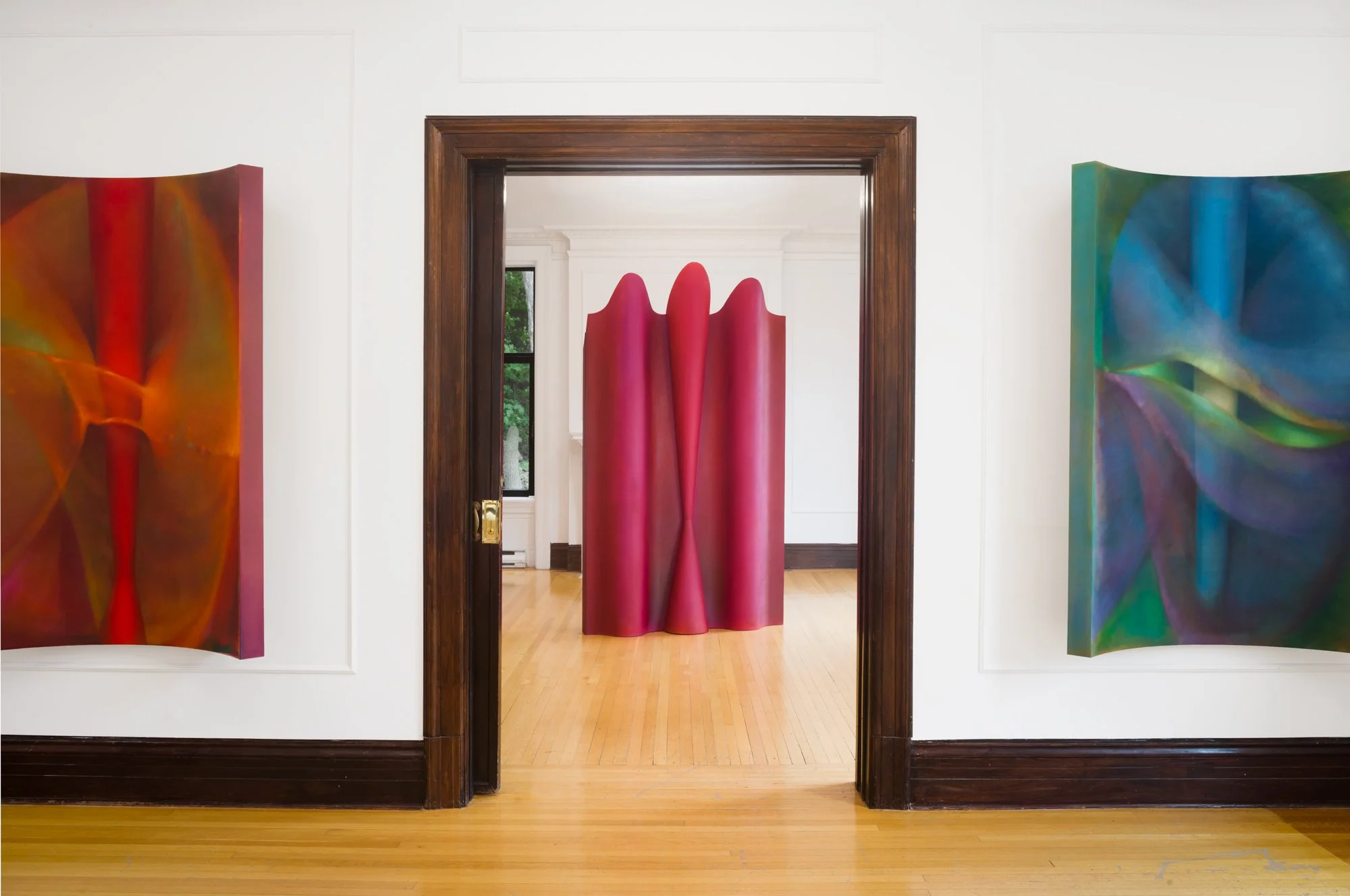
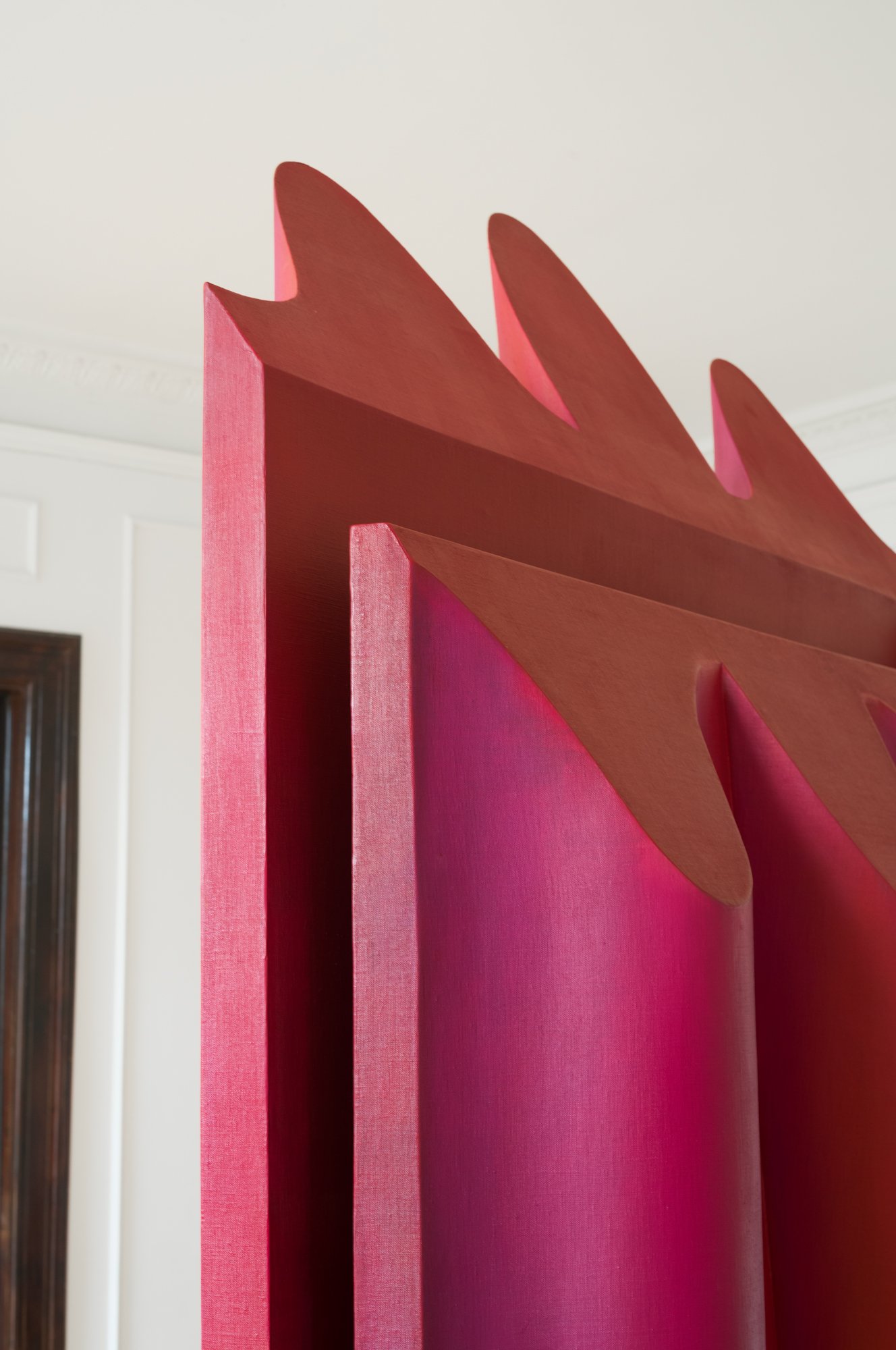
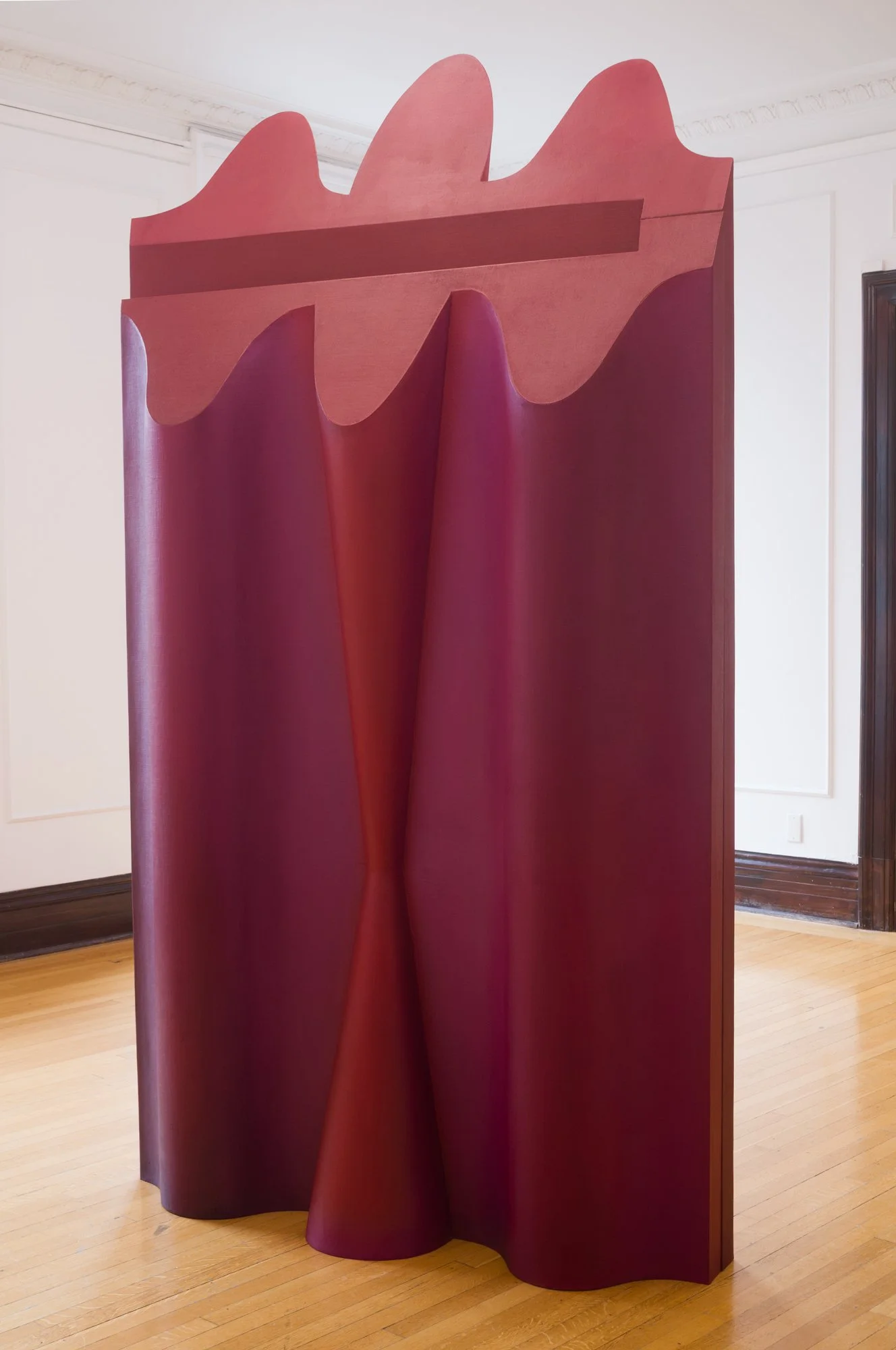
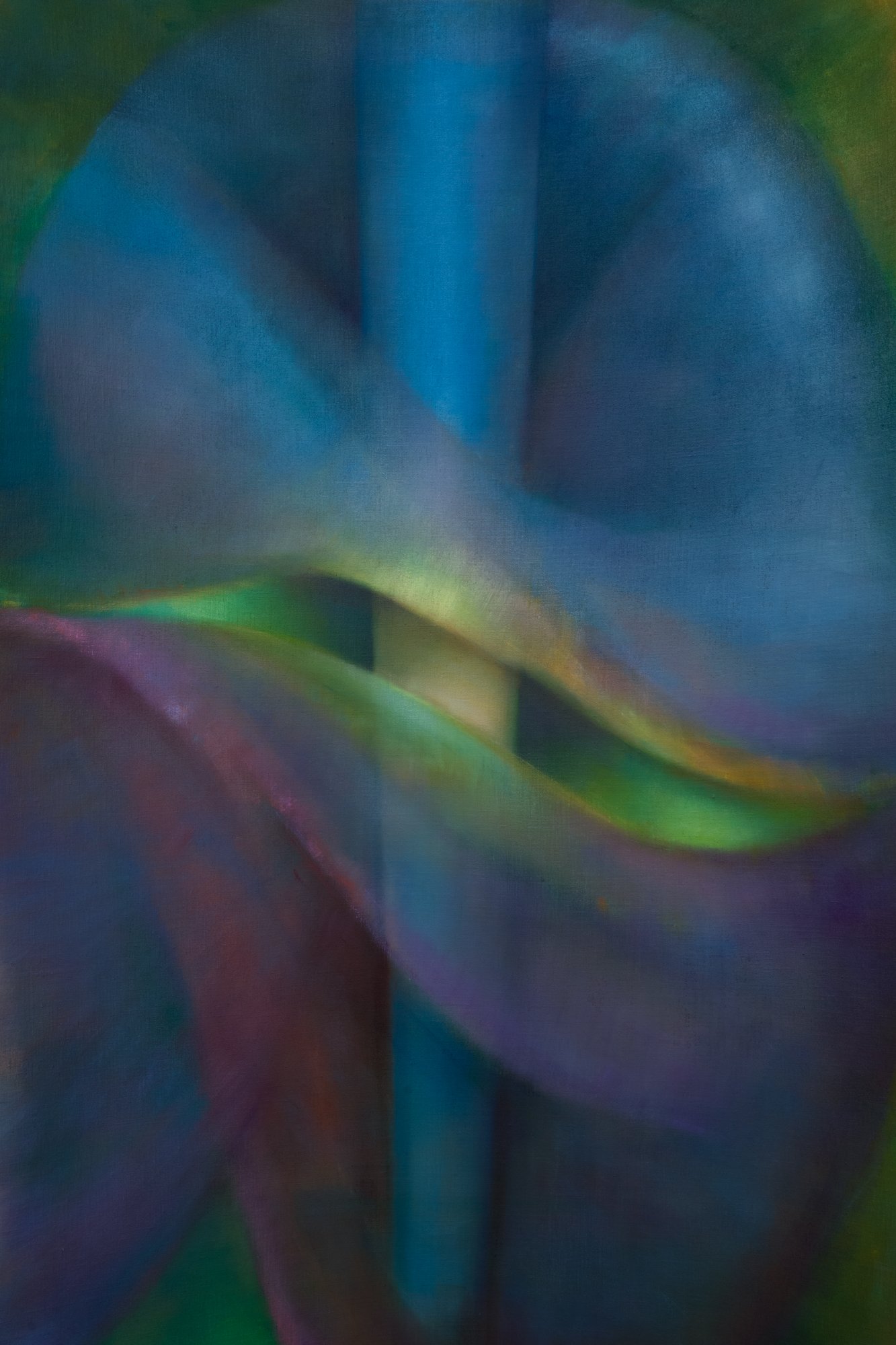
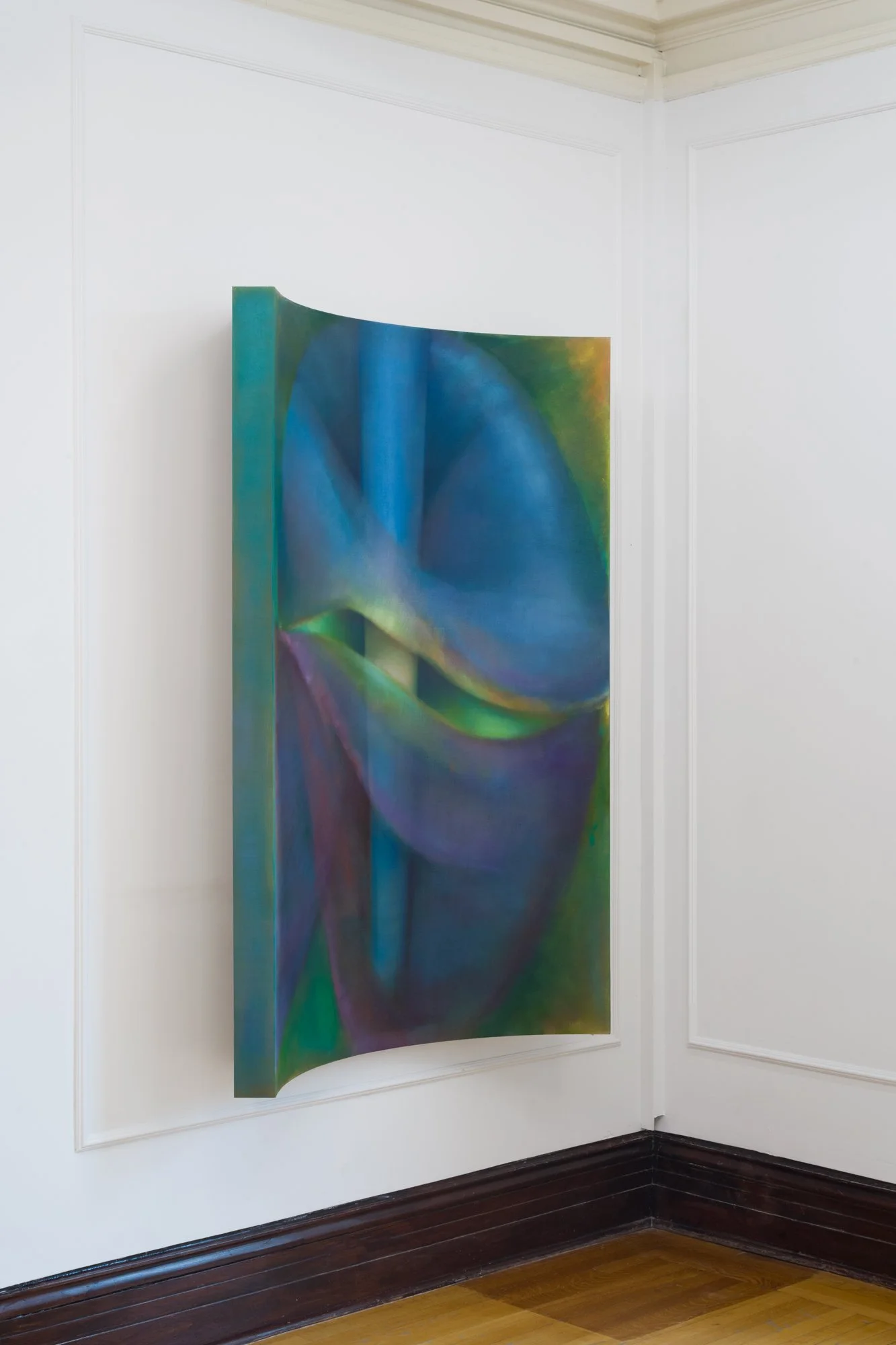
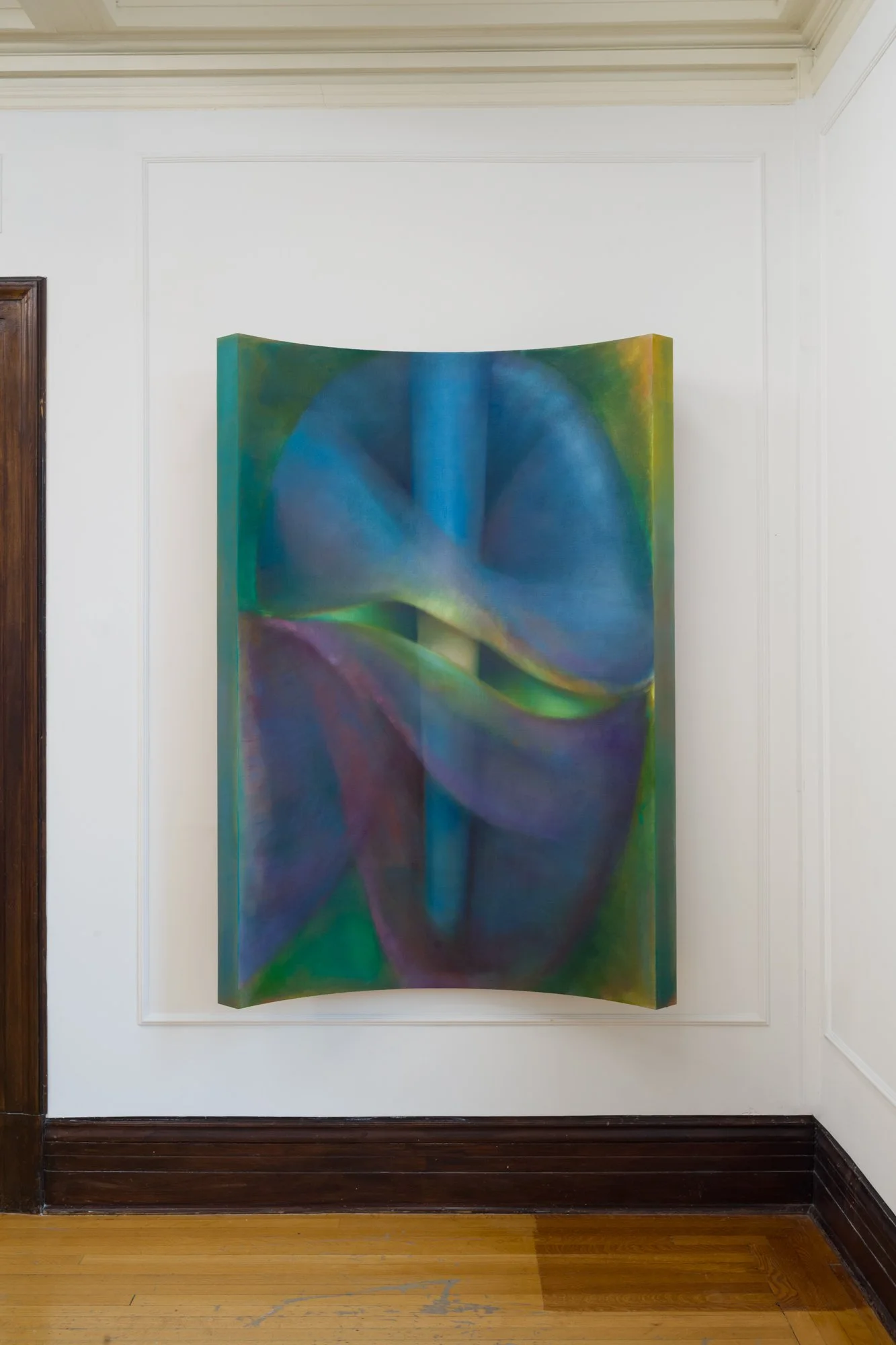
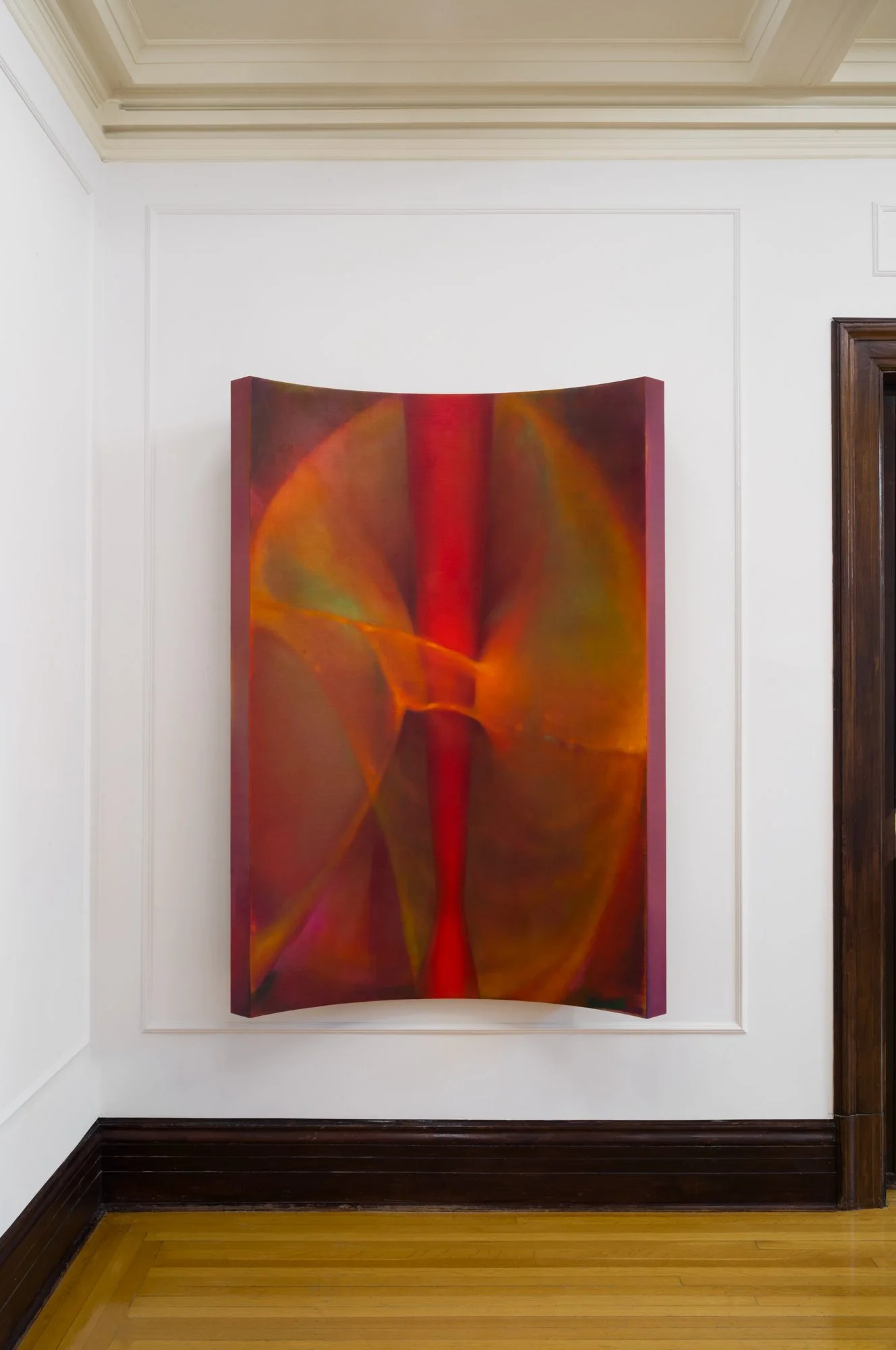
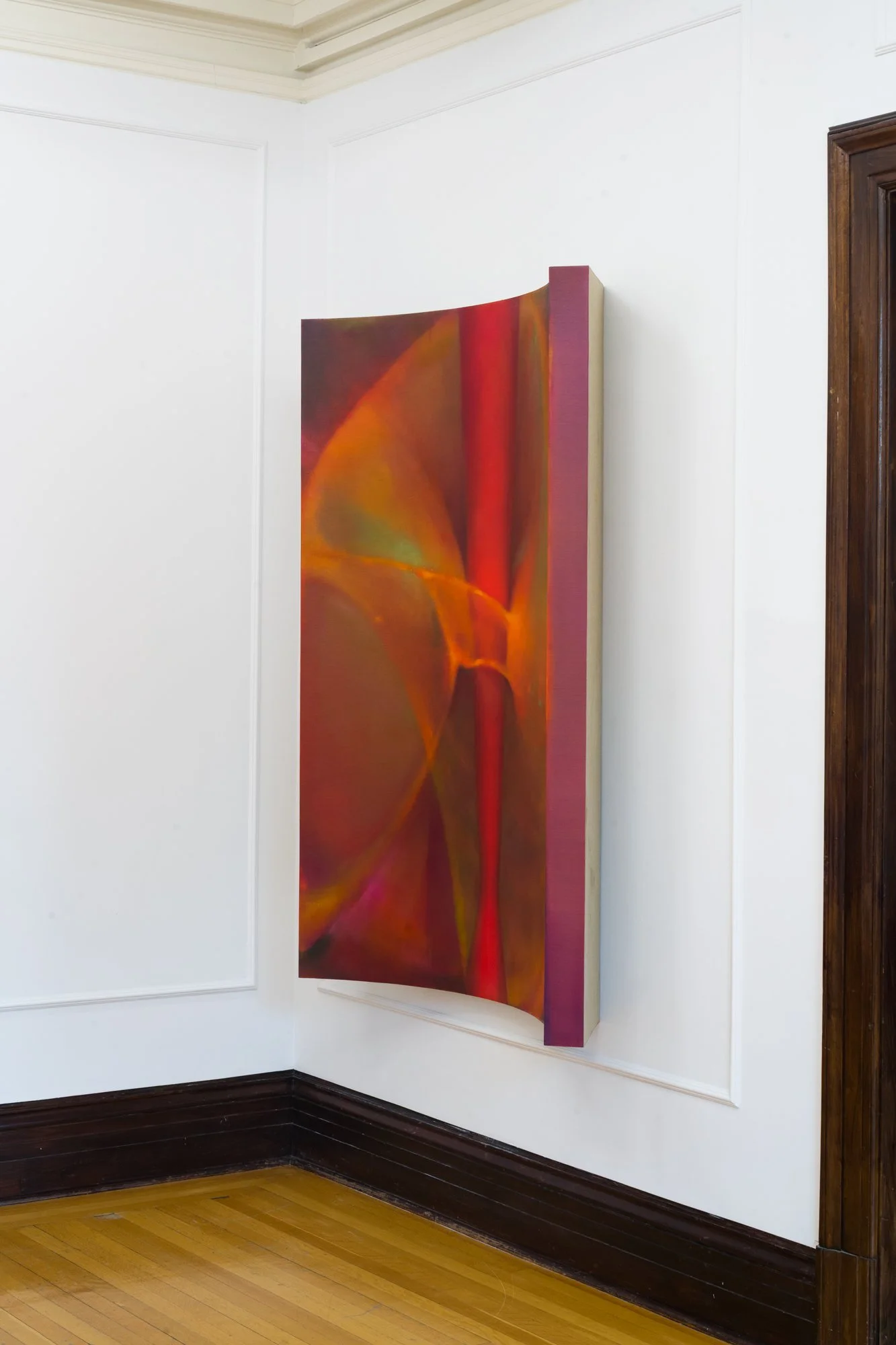
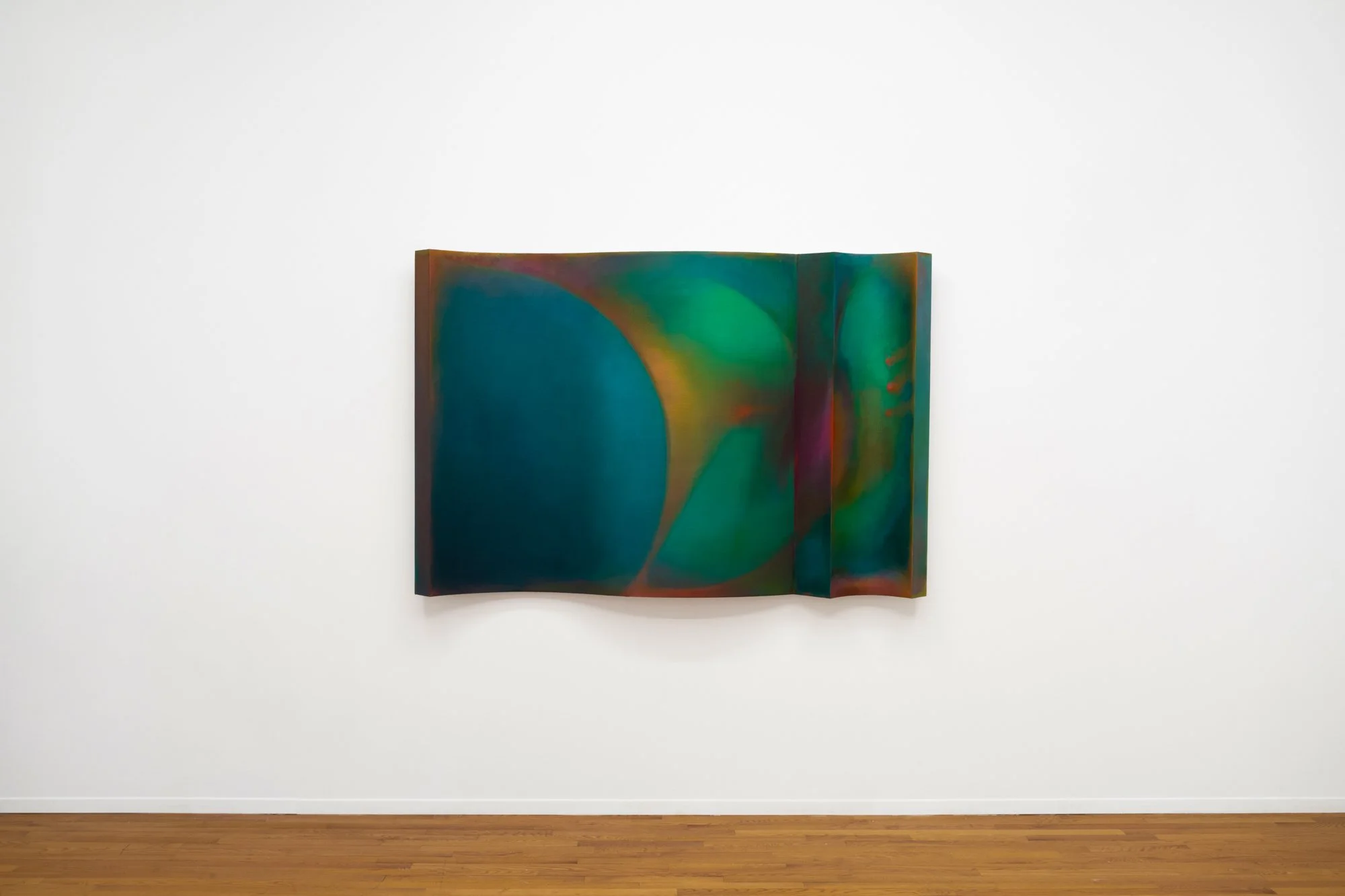
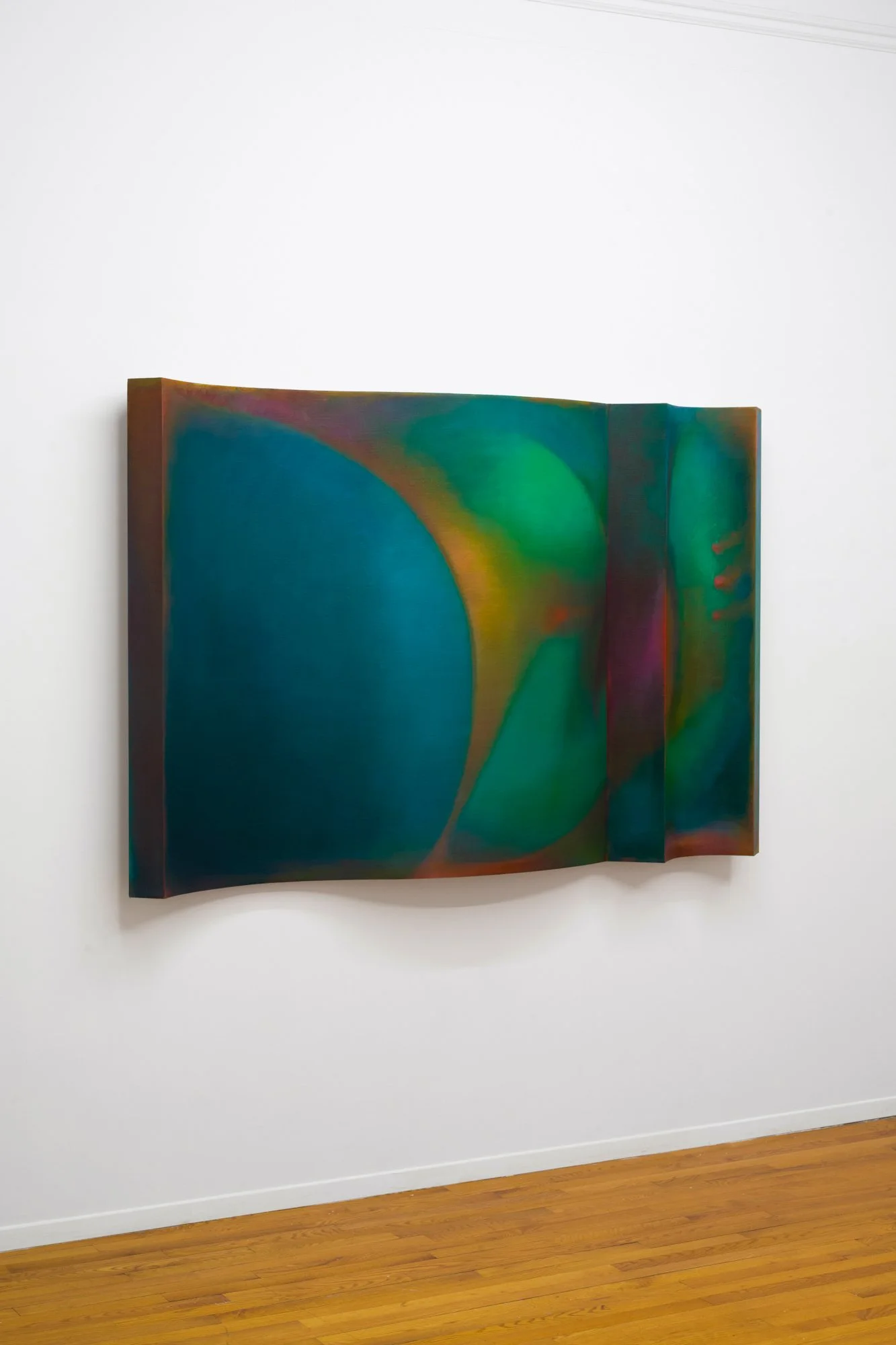
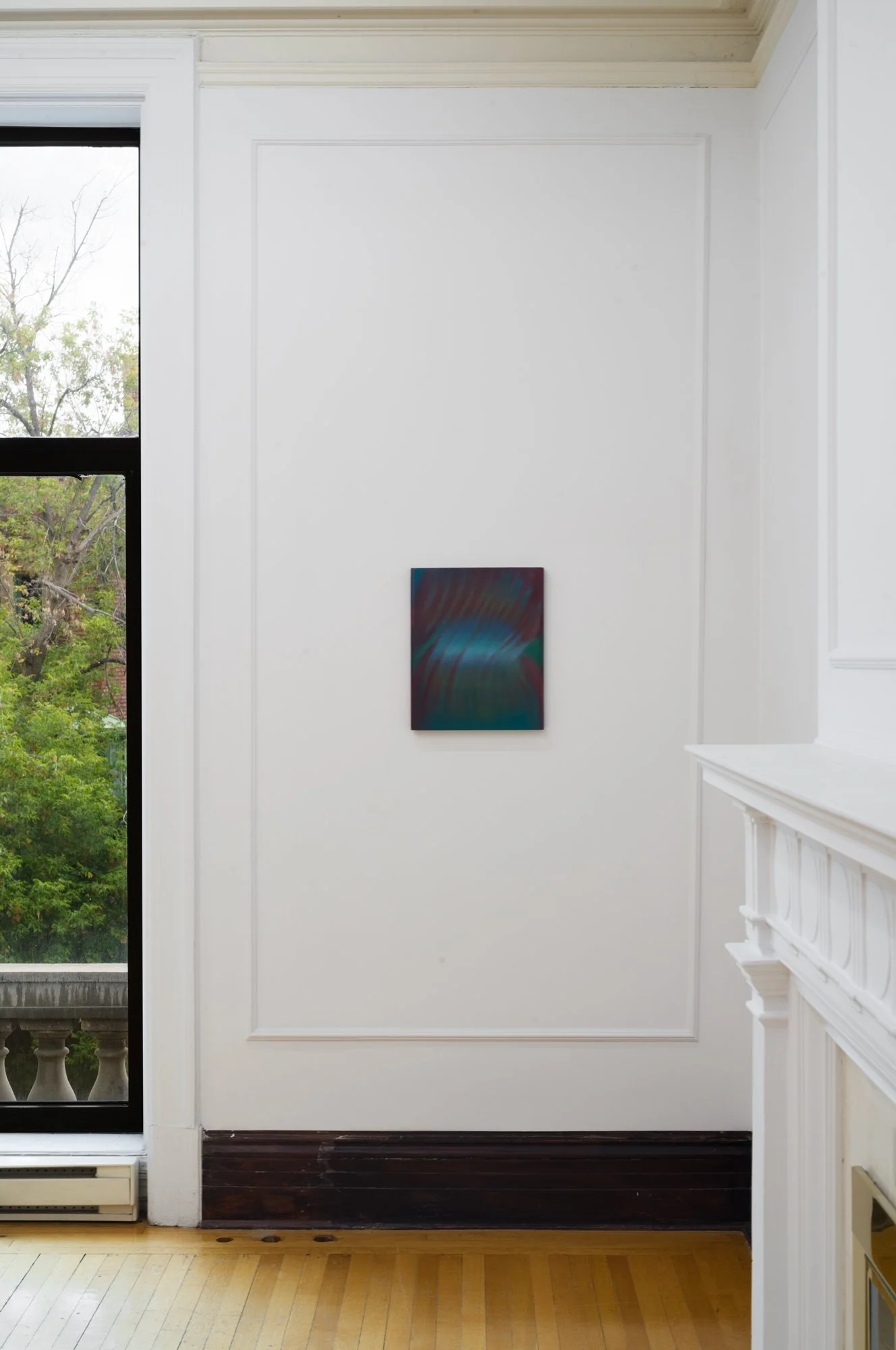
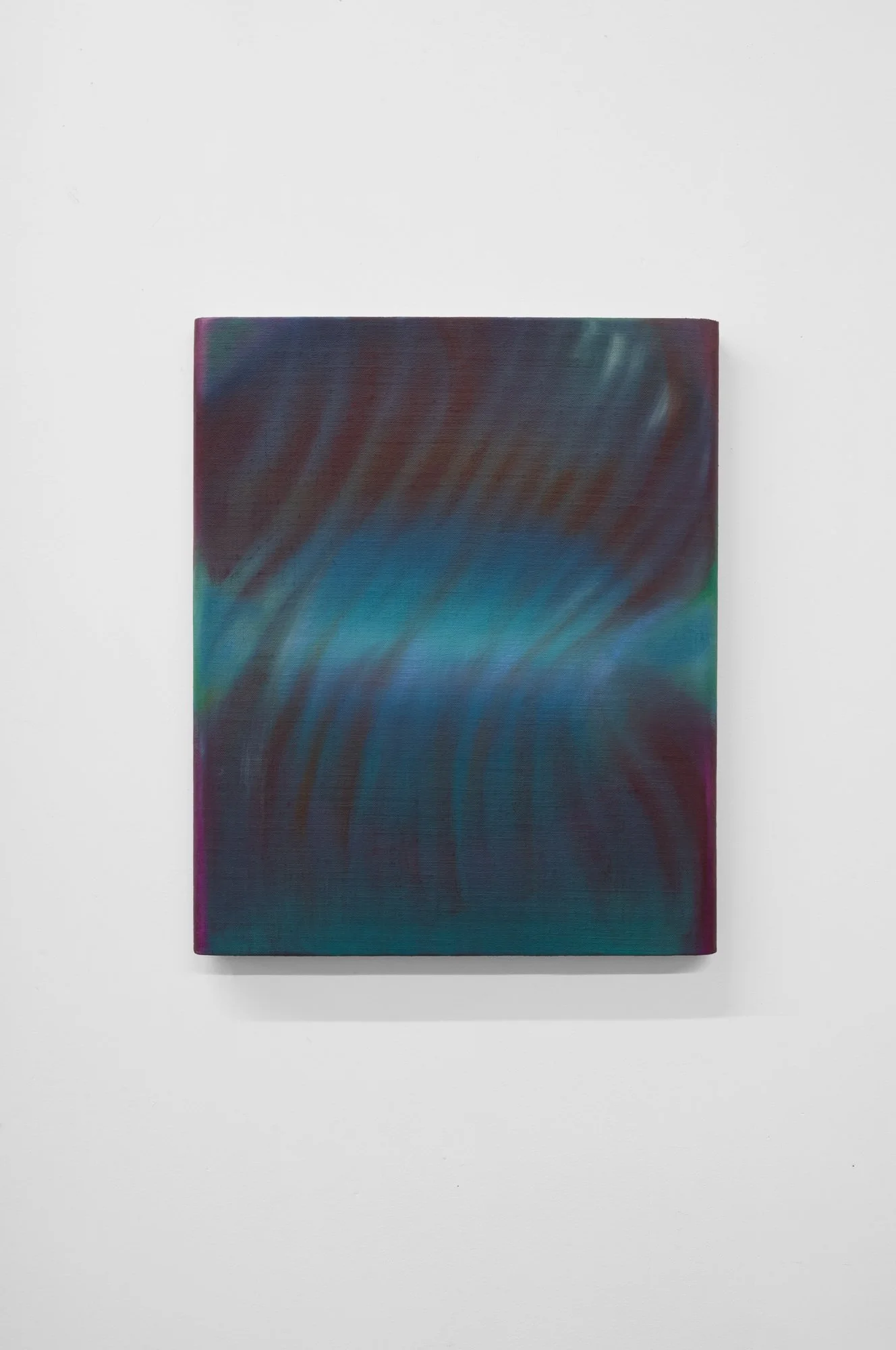
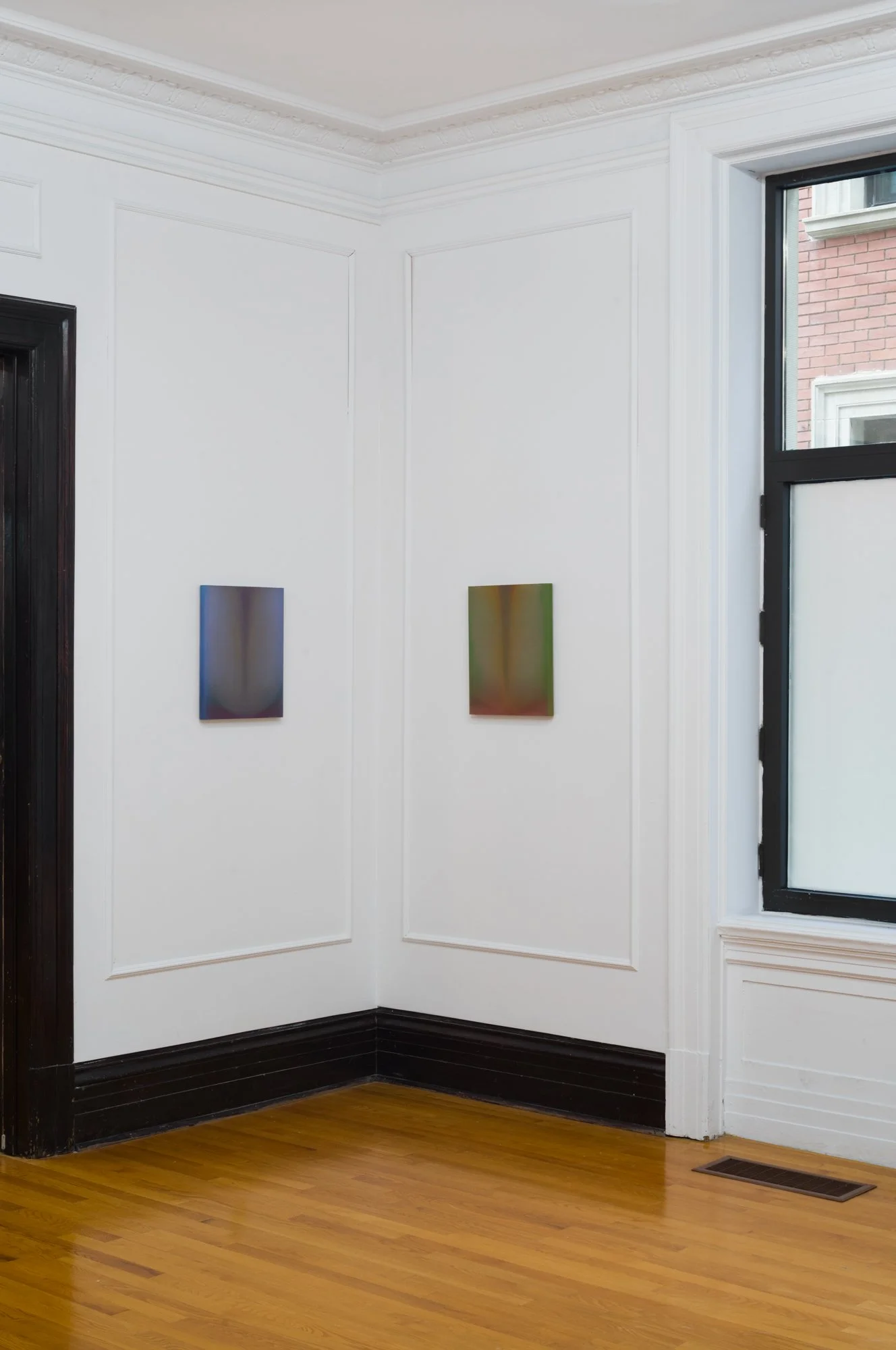
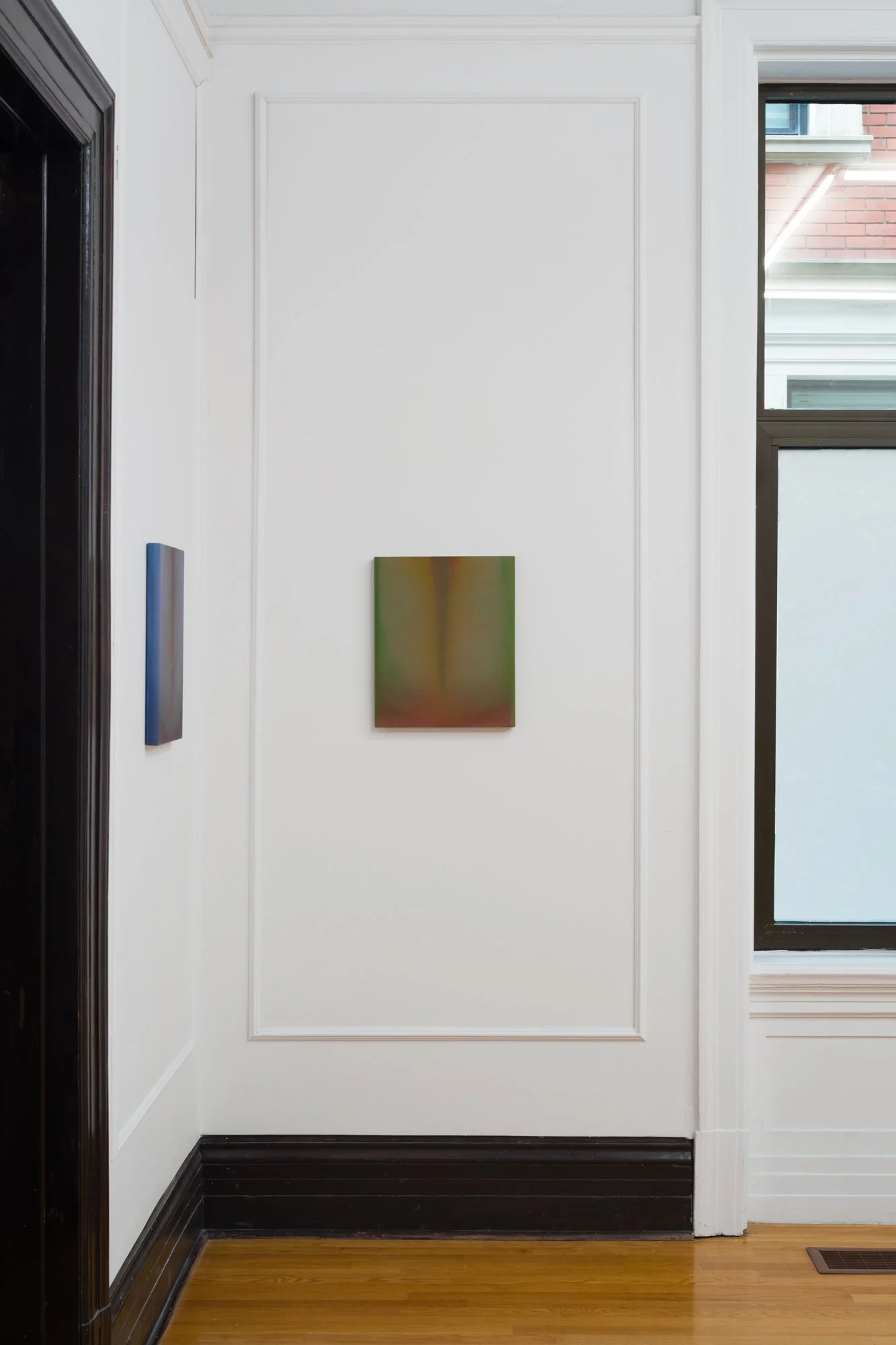
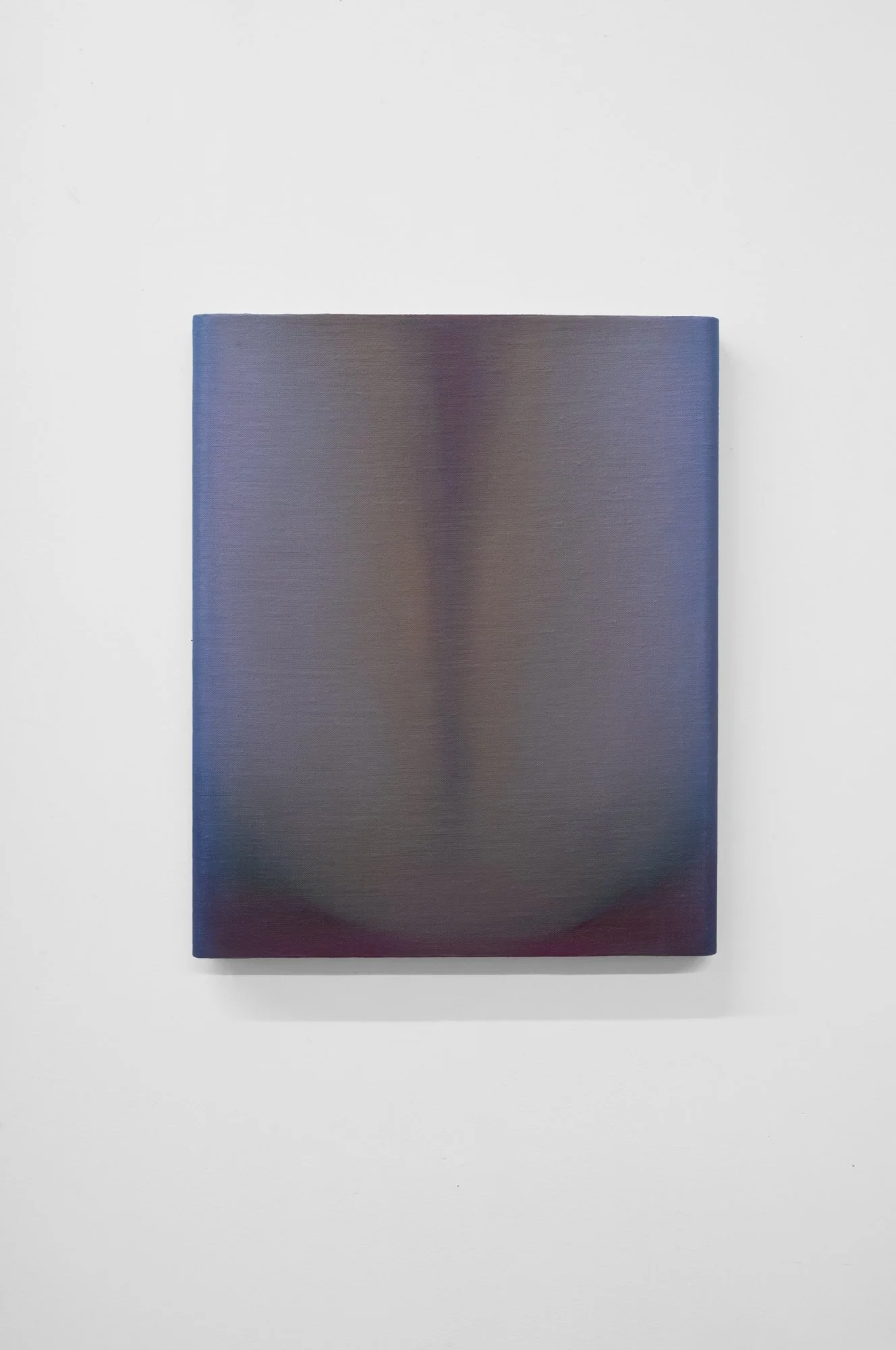
Over the past several years, Elise Lafontaine has developed a sophisticated language of forms and colour that she continues to subject to subtle and surprising transformations. Lafontaine is attuned to the extraordinary physical and psychological force that can emerge from the encounter between oil paint and fabric. These new works are deliberately difficult to fix. Rectilinear structures soften; rounded forms become architectural; symmetry gives way to subtle distortions. Colour appears simultaneously solid and atmospheric, surface and depth, substance and light. The works continually frustrate the desire to settle upon a stable reading. They move between different perceptual registers: to see a structure, then a body; a surface, then a space; an image, then an object.
Lafontaine experienced weekly visits to church as part of her childhood. It was within the vastness of the nave, during Sunday Mass, that she encountered one of her earliest overwhelming aesthetic experiences: the reverberation of the organ, the morning light filtering through stained glass, the verticality of the architecture, and the collective choreography of bodies and sound. Oil paint and linen become the means through which she constructs a secular equivalent to that earlier experience of transcendence. Her paintings do not illustrate the sacred; rather, they attempt to recover something of its affective and spatial power. Their ambition is not to depict another world, but to alter our experience of the one before us.
Another formative encounter occurred during a visit to the prehistoric caves of Niaux in France. There, ancient paintings appeared to Lafontaine not as images simply placed upon a surface, but as gestures embedded within the substance of the world itself. The paintings follow the contours of rock; their visibility is conditioned by darkness, depth, and the movement of bodies through space. This understanding of painting as something that inhabits and transforms space has remained fundamental to Lafontaine’s practice, particularly in more recent years.
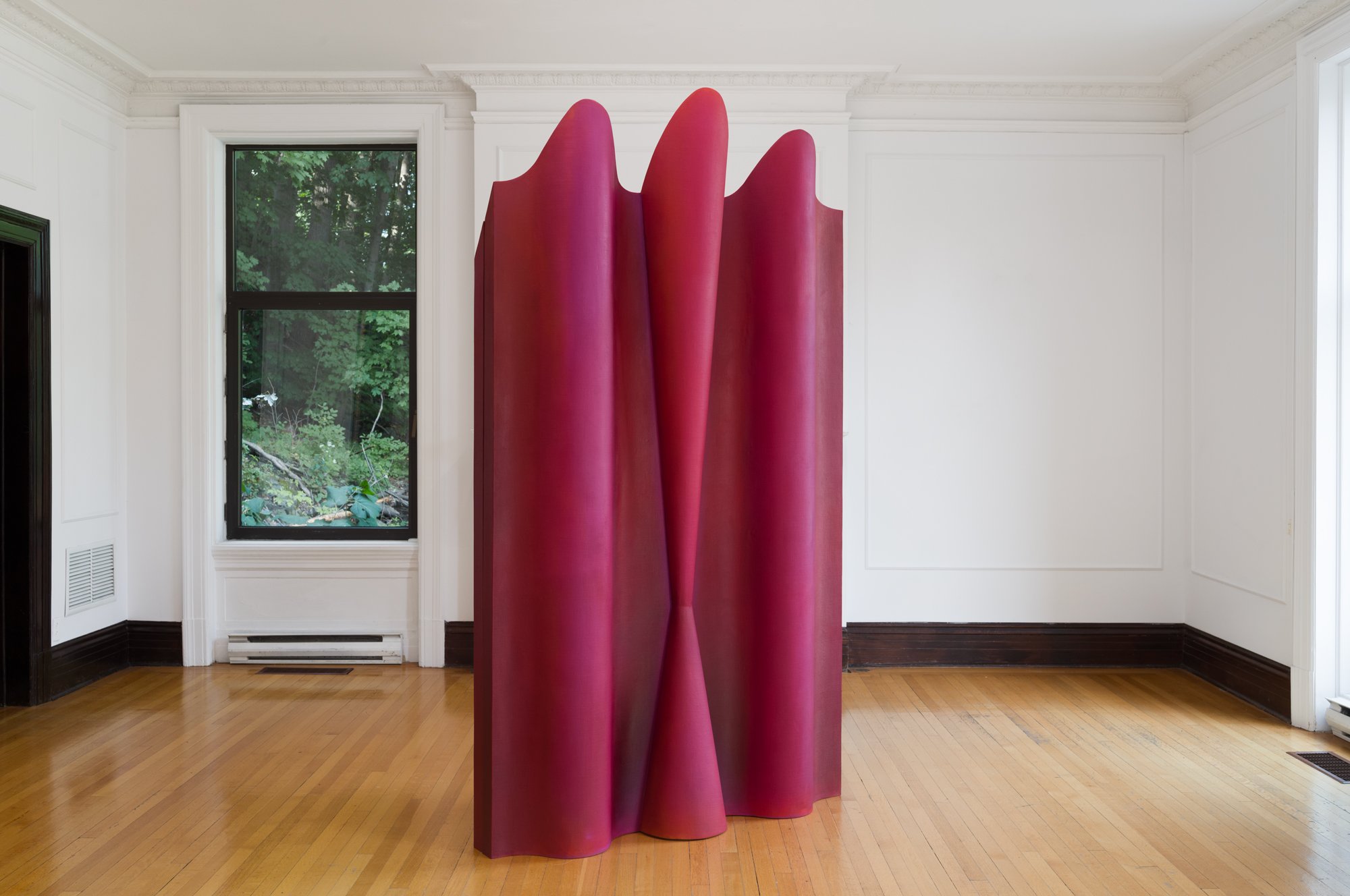
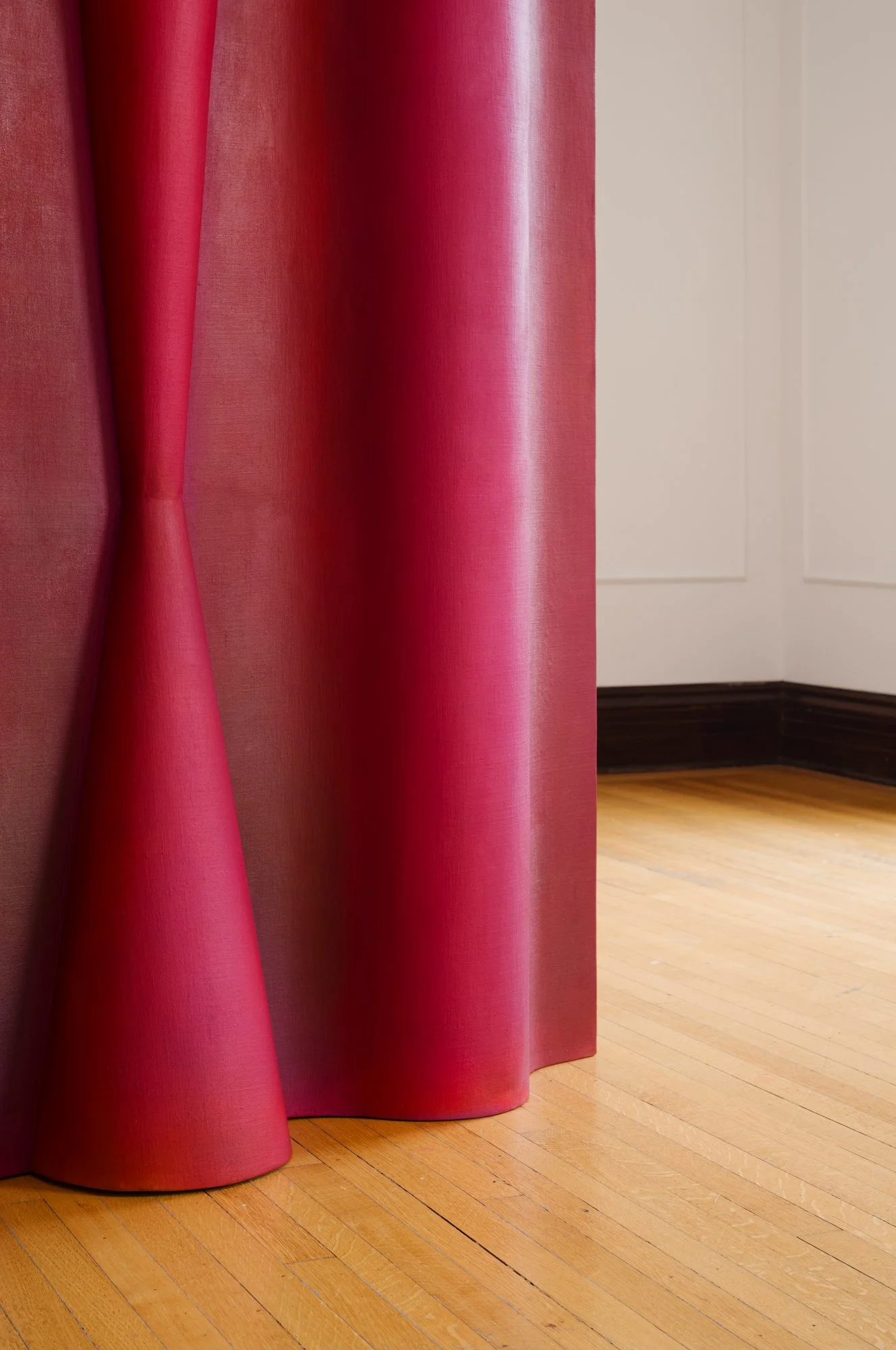
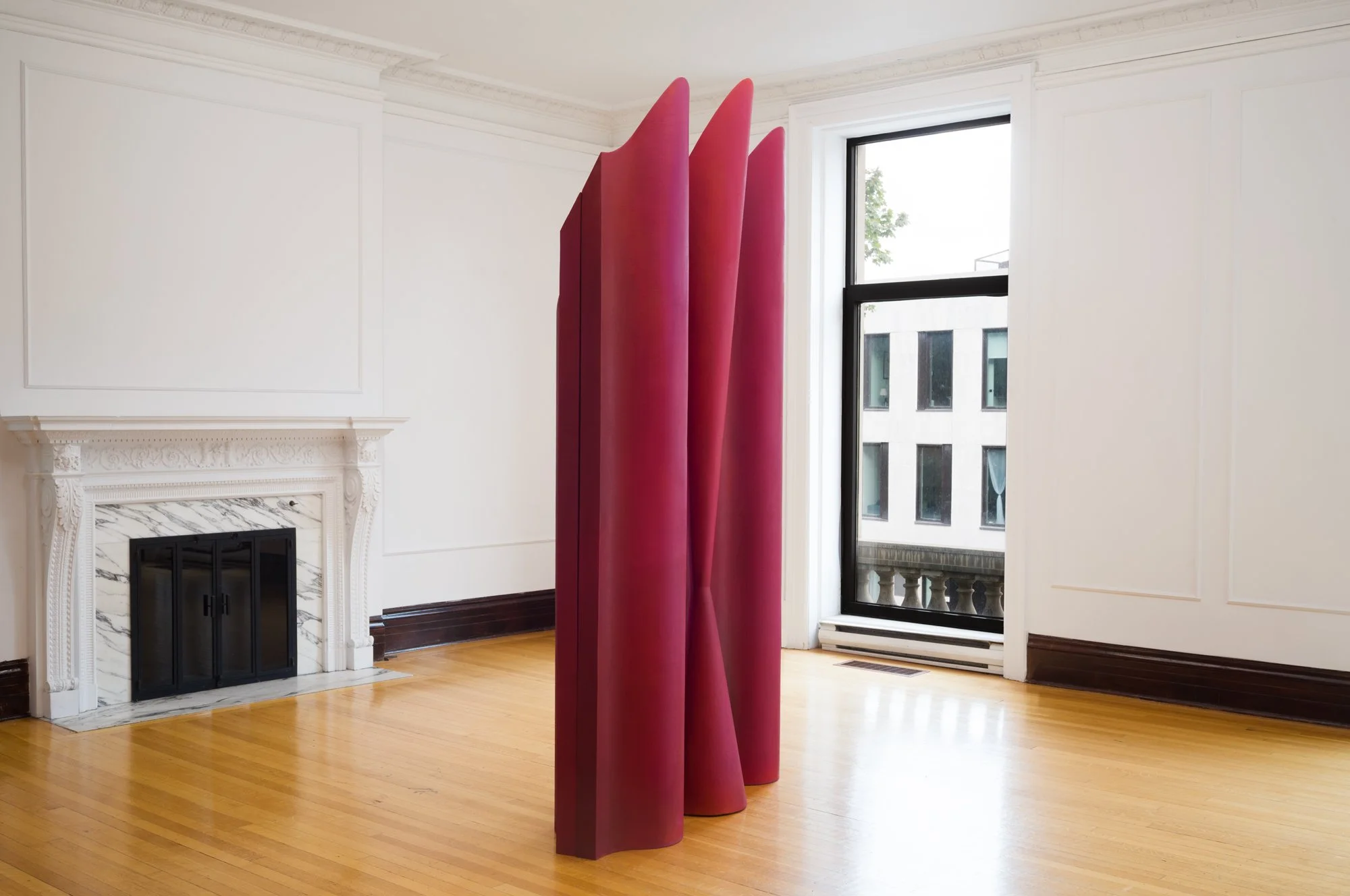
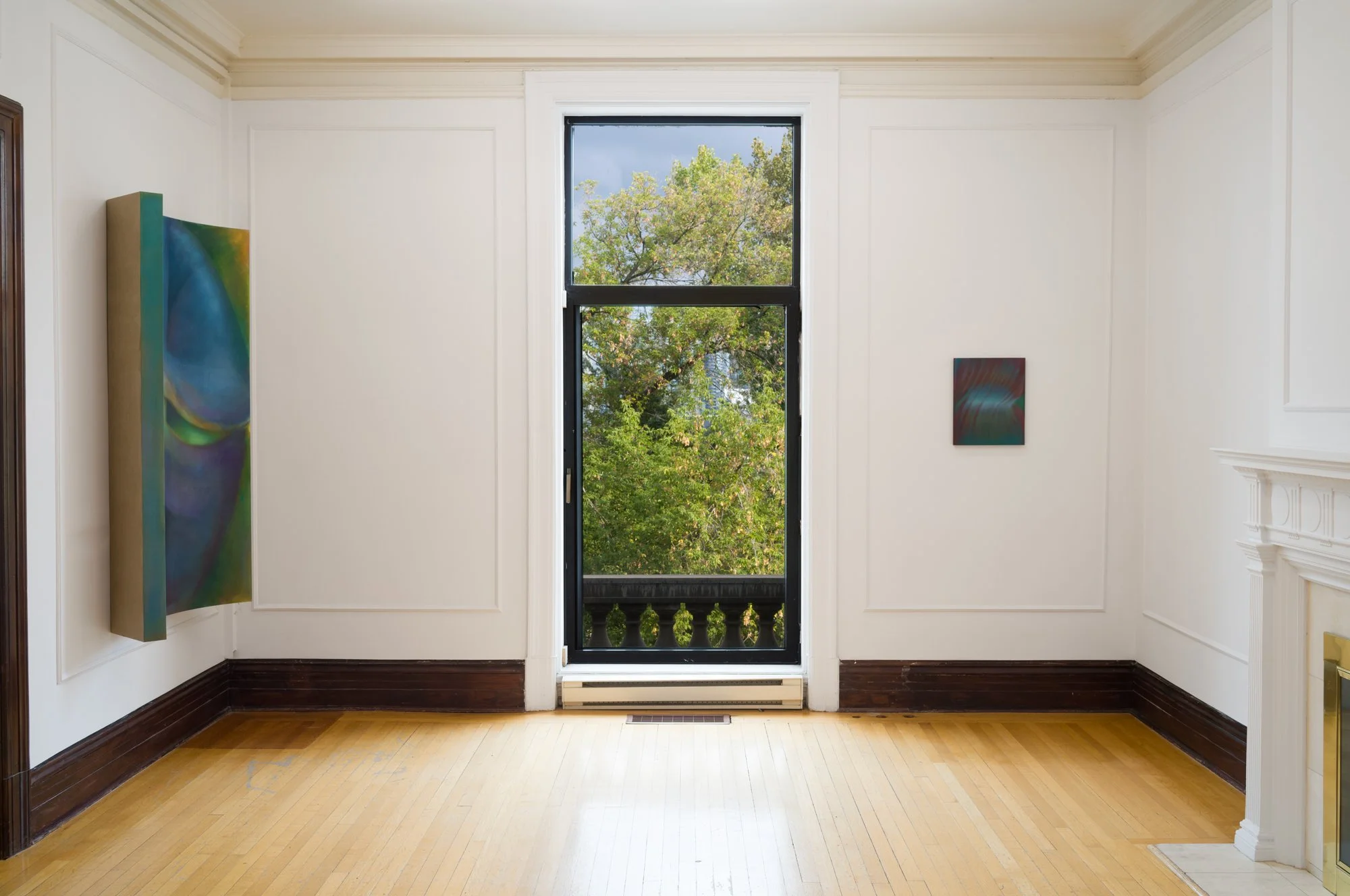
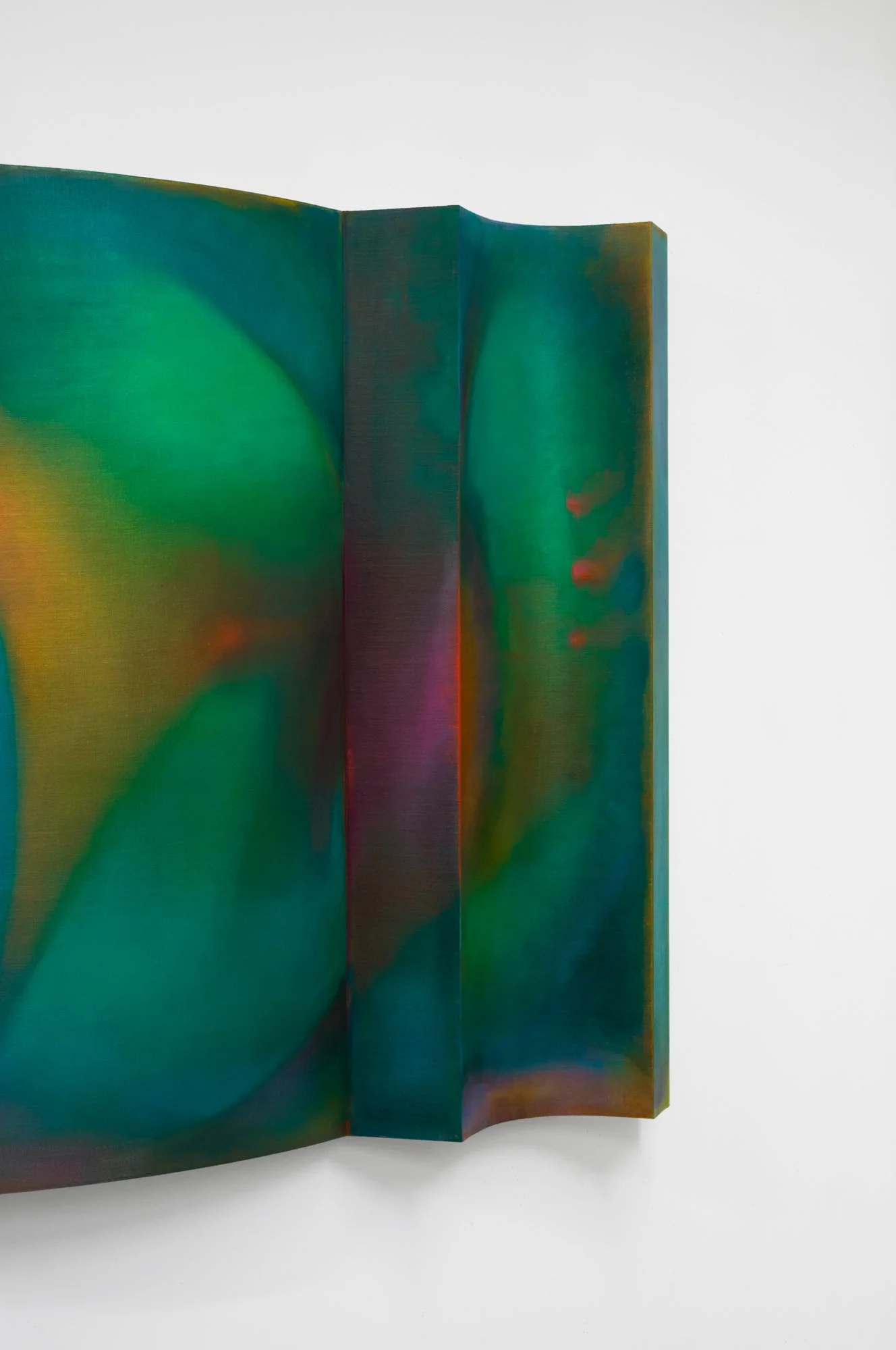
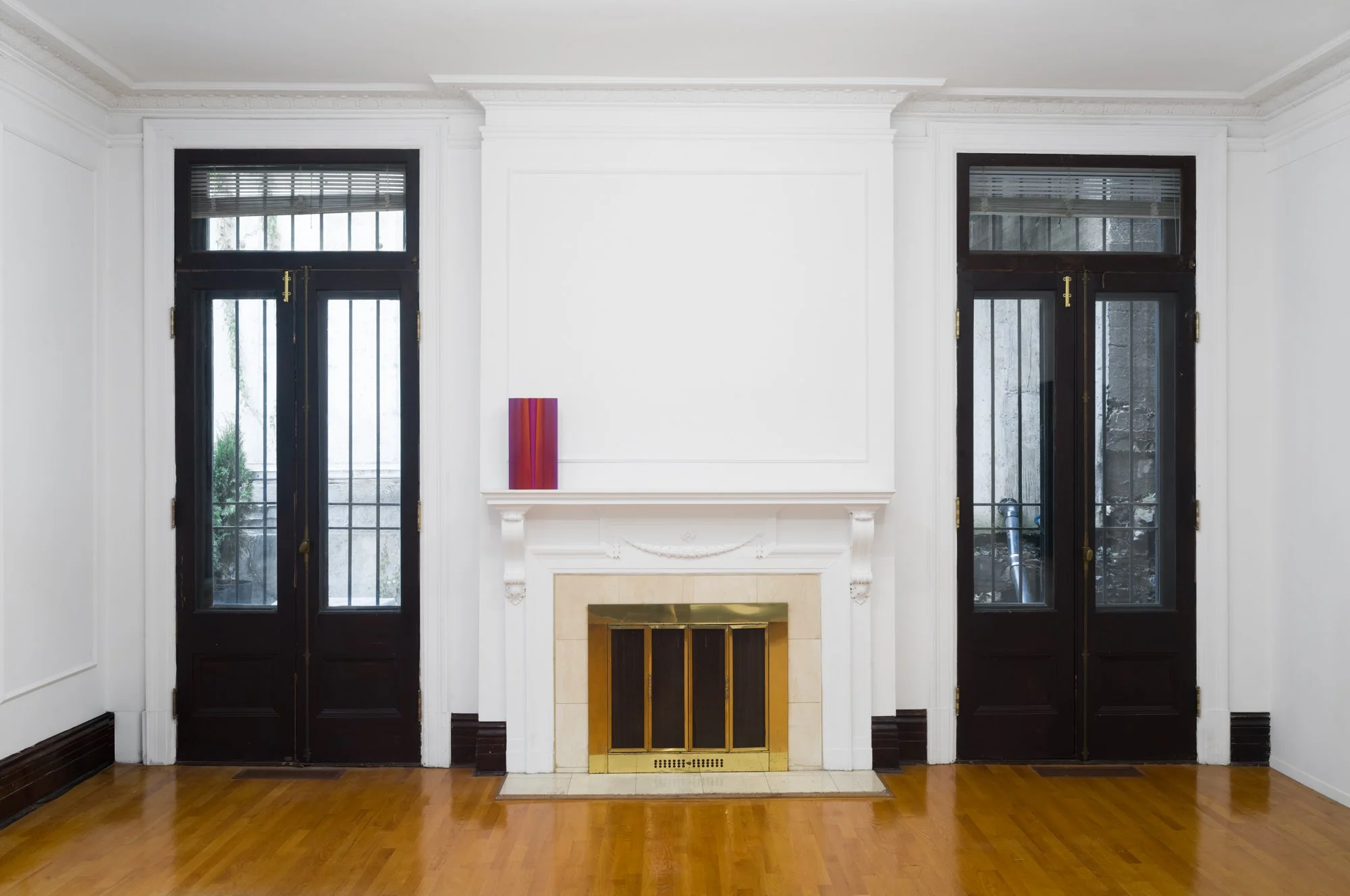
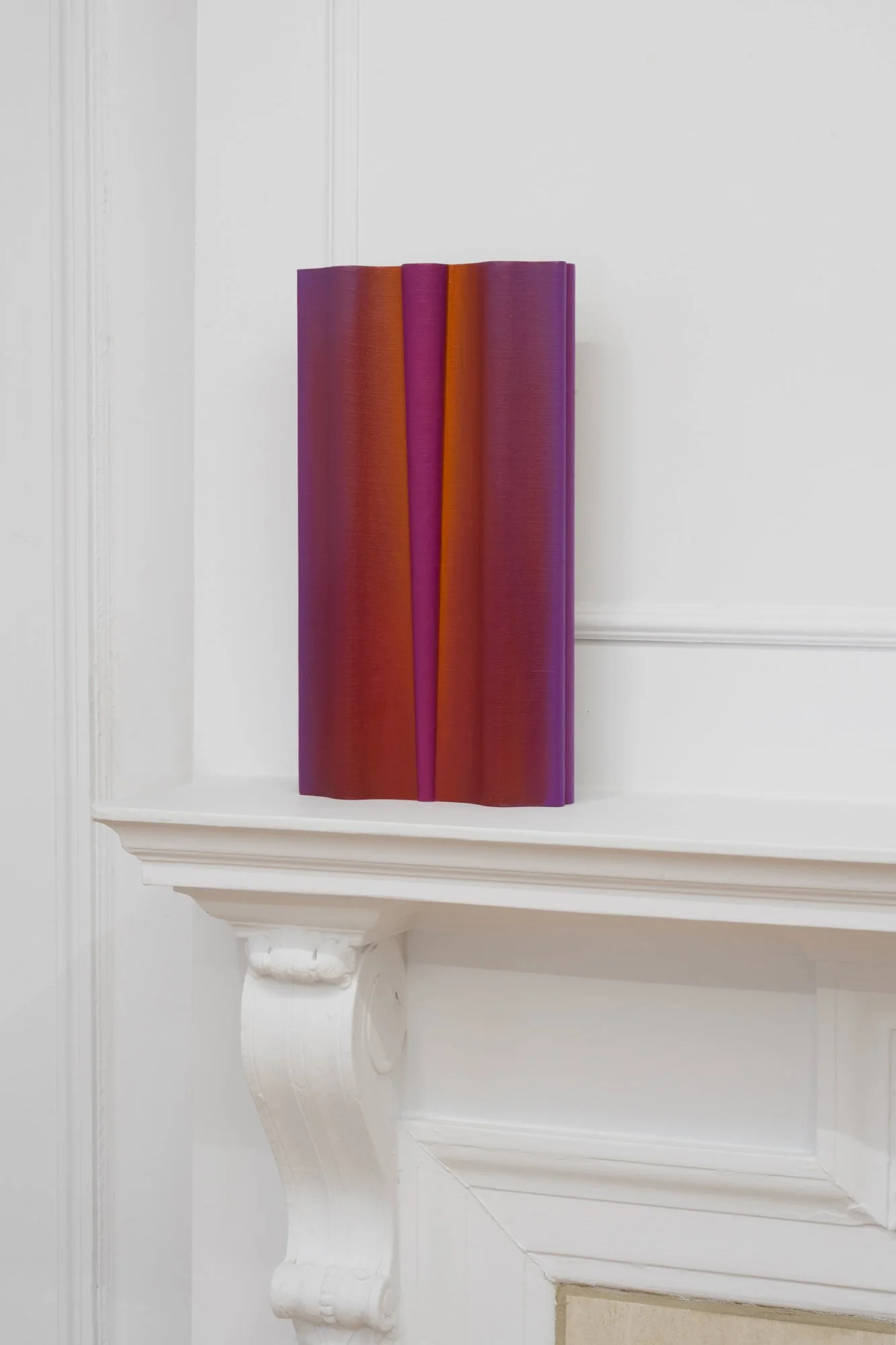
It is particularly evident in the marouflage technique she developed. Linen is stretched and mounted over carved wooden structures, following their angles, recesses, and volumes. The resulting works can evoke columns, portals, windows, architectural fragments, or instruments, yet they resist identification with any single architectural form. They are simultaneously paintings, sculptures, and ornament. Their forms feel strangely familiar while remaining impossible to locate, as though they belonged not to a specific building or place but to a latent memory of architecture.
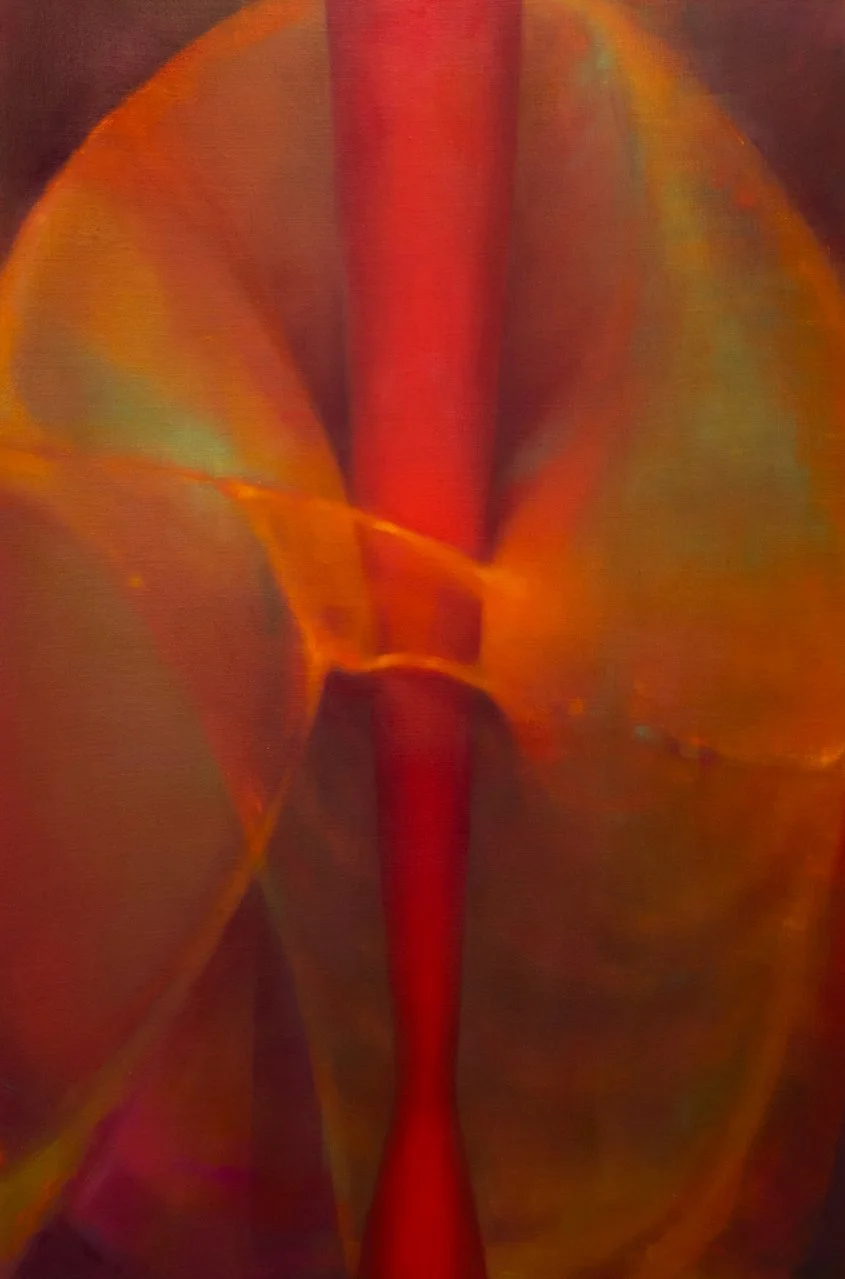
Colour moves across these structures as both image and material agent. It reveals edges and recesses, accentuates the geometry of the support, and at times seems to dissolve the very structure that contains it. The painting consequently oscillates between object and image, surface and volume, structure and sensation.
This oscillation feels profoundly musical. Raised within a family of musicians, Lafontaine has developed an acute sensitivity to rhythm, resonance, repetition, and vibration. Organ pipes recur throughout her work as both formal and conceptual motifs: their vertical sequences suggest columns, scores, intervals, or the measured passage of breath. The title Colorature draws the field of music and refers to a style of singing defined by ornament, agility and virtuosity. As a title, it proposes a group of painting that do not occupy silence but resonate collectively, suggesting that colour itself might possess duration.
What emerges is a form of abstraction less interested in purification than in intensification. Lafontaine does not seek to strip painting of the world but to find, within its most elemental means, another way of encountering it. At its most compelling, Lafontaine’s work proposes painting as an instrument of attunement. Through the reciprocal action of colour, light, structure, and space, her work creates conditions in which perception becomes heightened and meaning remains open. It lingers before what cannot be immediately named and attends to resonance rather than recognition, sensation rather than explanation. In this sense, the metaphysical dimension of Lafontaine’s practice is not located in any explicit religious symbolism, but in its capacity to bridge the chasm of disconnect that pervades our time and offers an opportunity to experience a profound unity with the world. Painting becomes less an image of something than a site in which something might be experienced: a quiet but insistent invitation to imagine our existence beyond the limits of the immediately knowable.
— Text by Anais Castro
-
Élise would like to thank Étienne Rose, Élaine Despins, Bernard Lefebvre, Maxime Bruneau, Louis-Carl Laplante, Anaïs Castro, Catherine Barnabé, Sophie Latouche, William Sabourin, the International Studio & Curatorial Program (ISCP), Badih, my family and friends, and Pangée.
In studio with Élise Lafontaine, in preparation for her solo exhibition Colorature, at Pangée.
Filmed in August 2026
Crédits : Réalisation / Direction photo / Montage : - Manea Timau Gaffer : - Arthur Schwab Musique : - Zachary Beaudoin
---
EXHIBITION