Exploded View
Artist: Ben Gould
Dates: July 9 - August 22, 2026
Opening: Thursday, July 9, 2026, from 5-8 p.m.
Venue : Pangée, 1305 ave des Pins Ouest, Montreal
-
Disarticulated Bodies by Mary Hunter
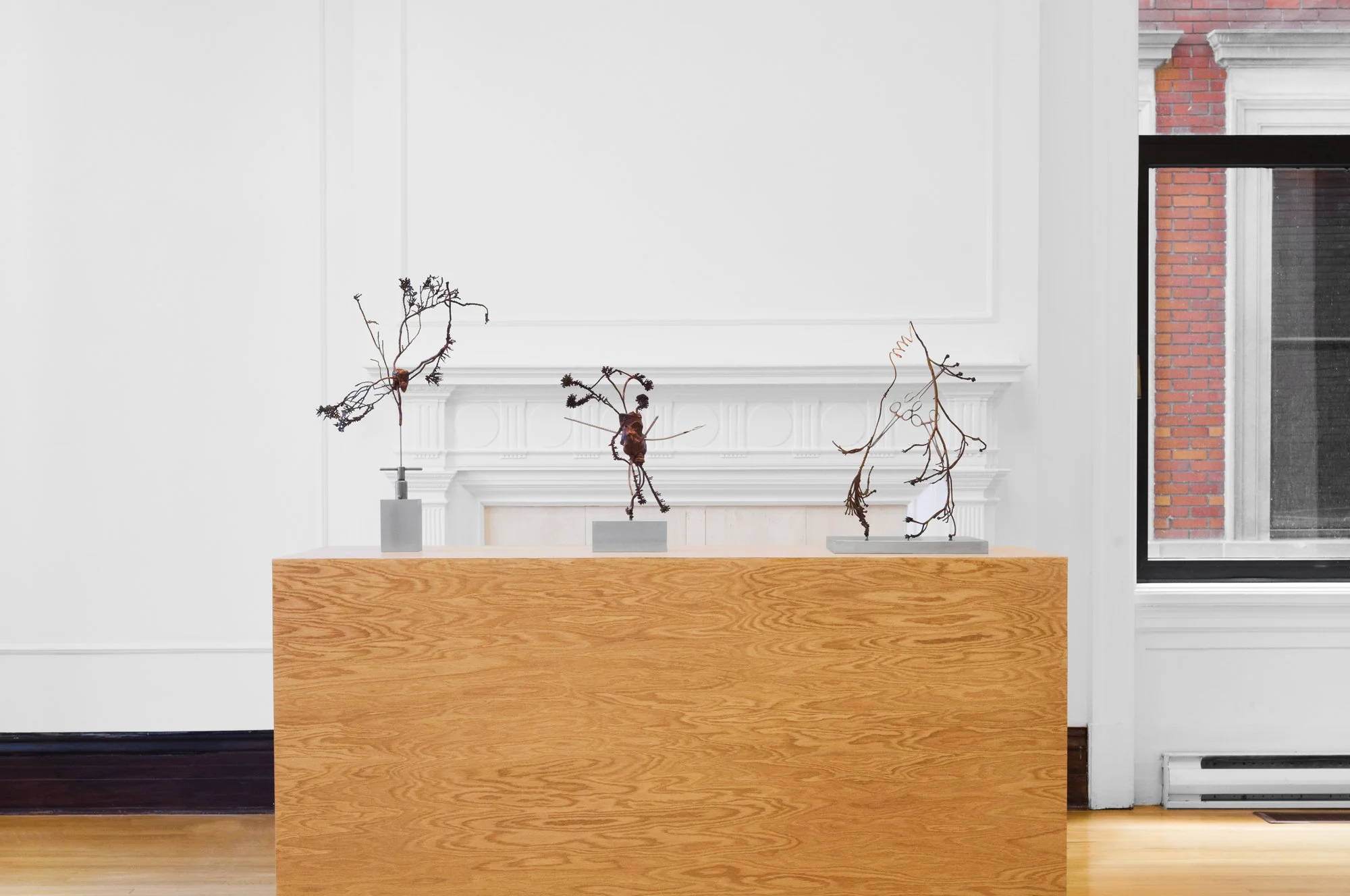
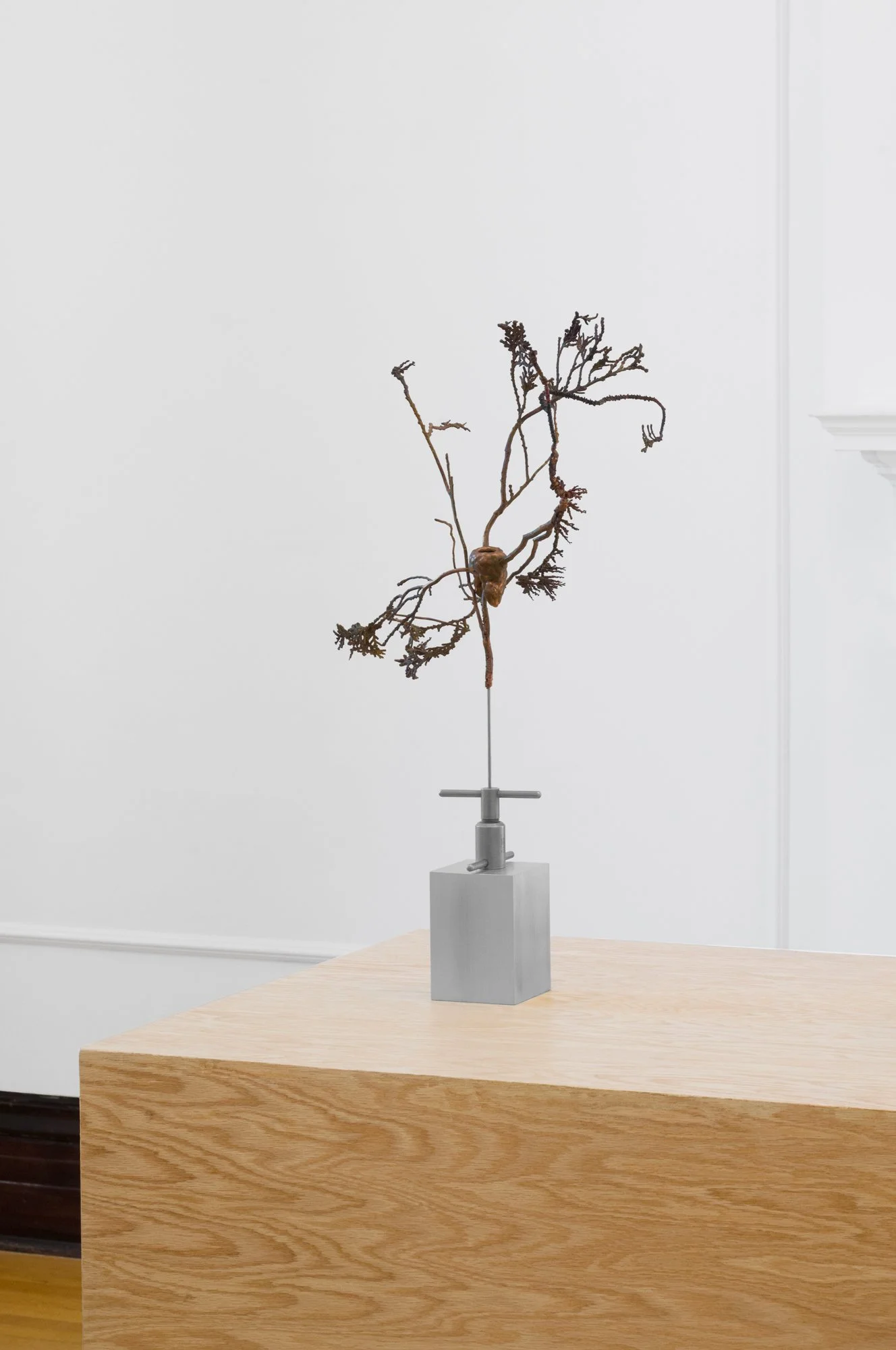
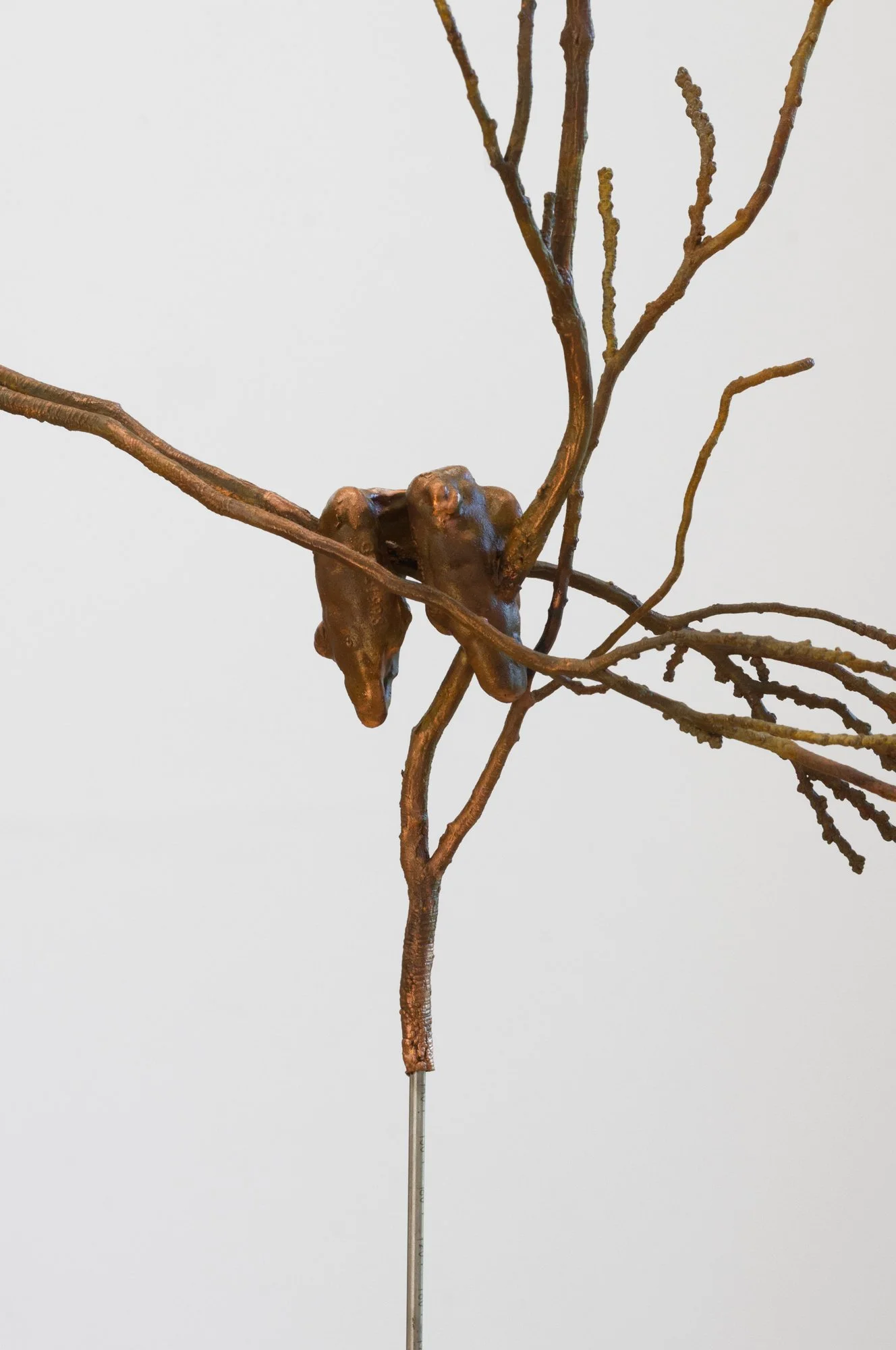
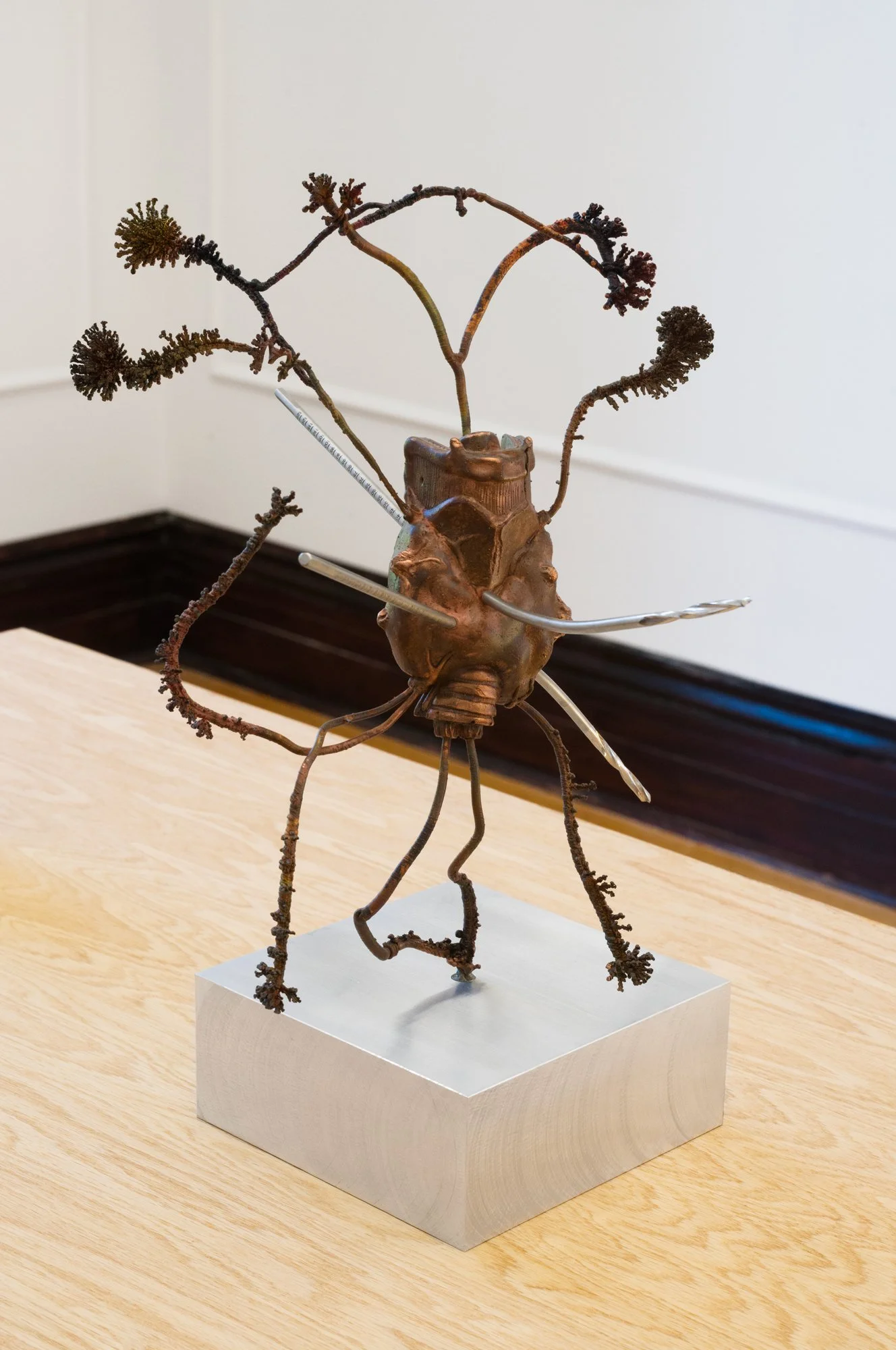
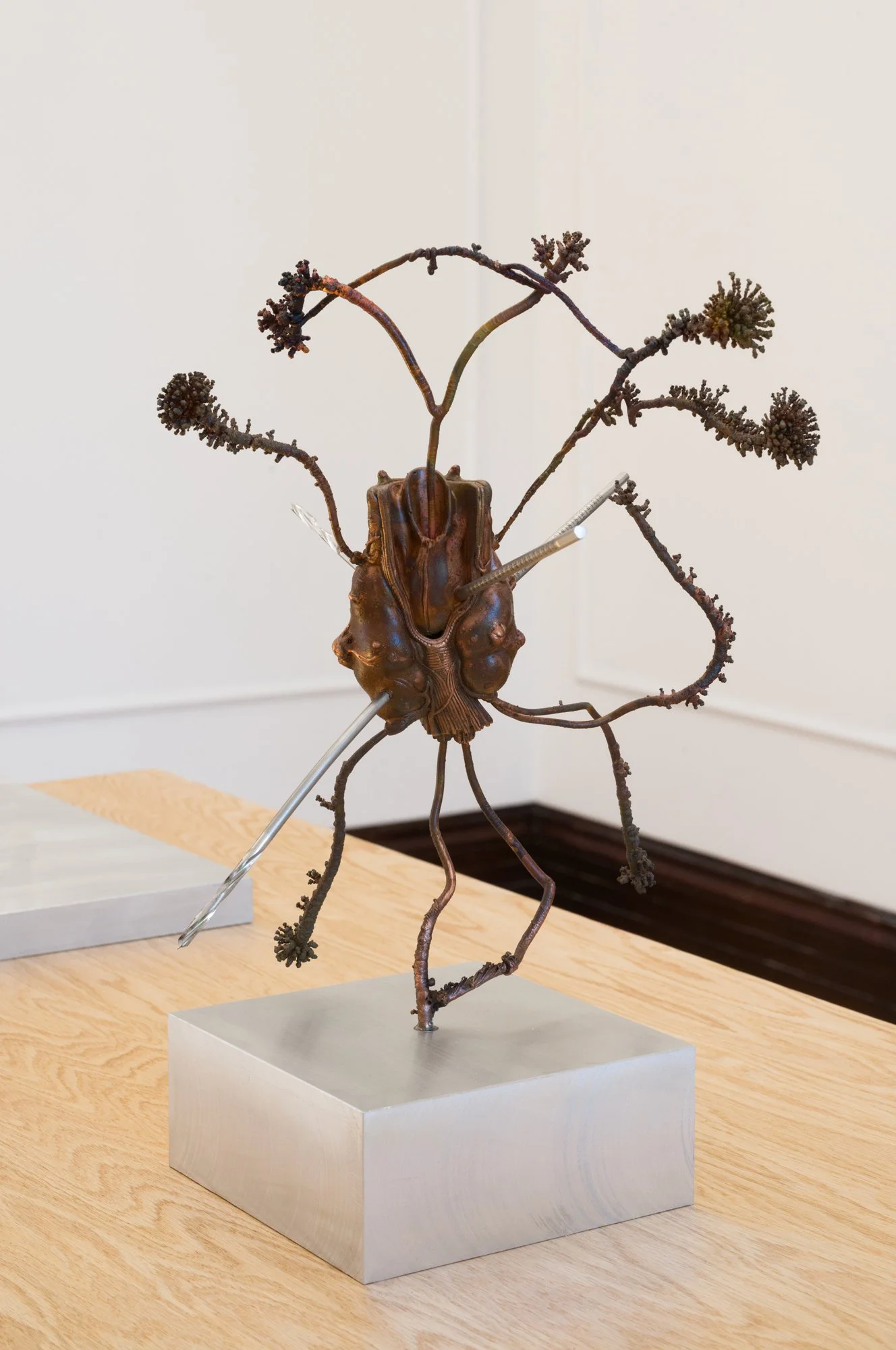
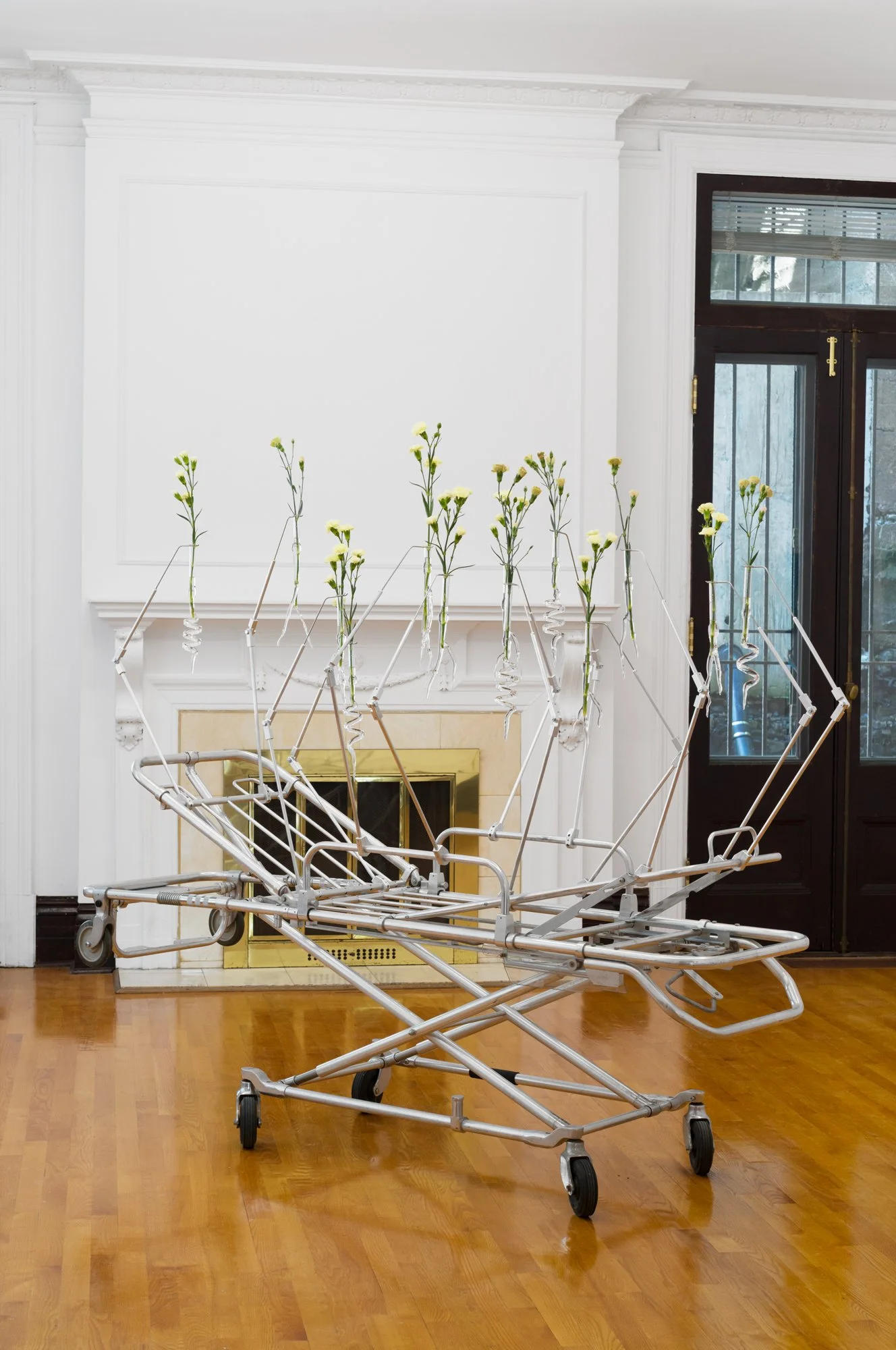
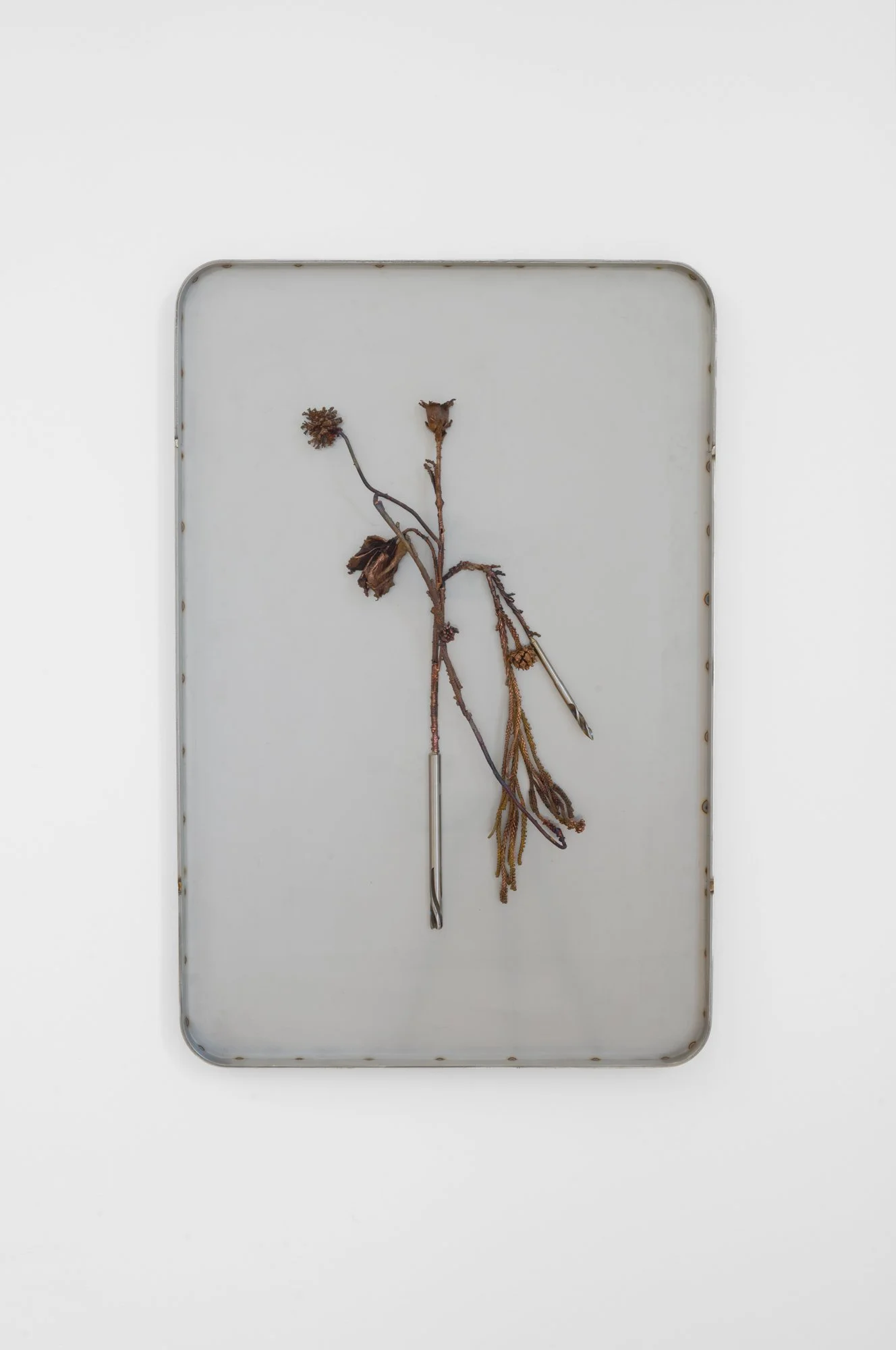
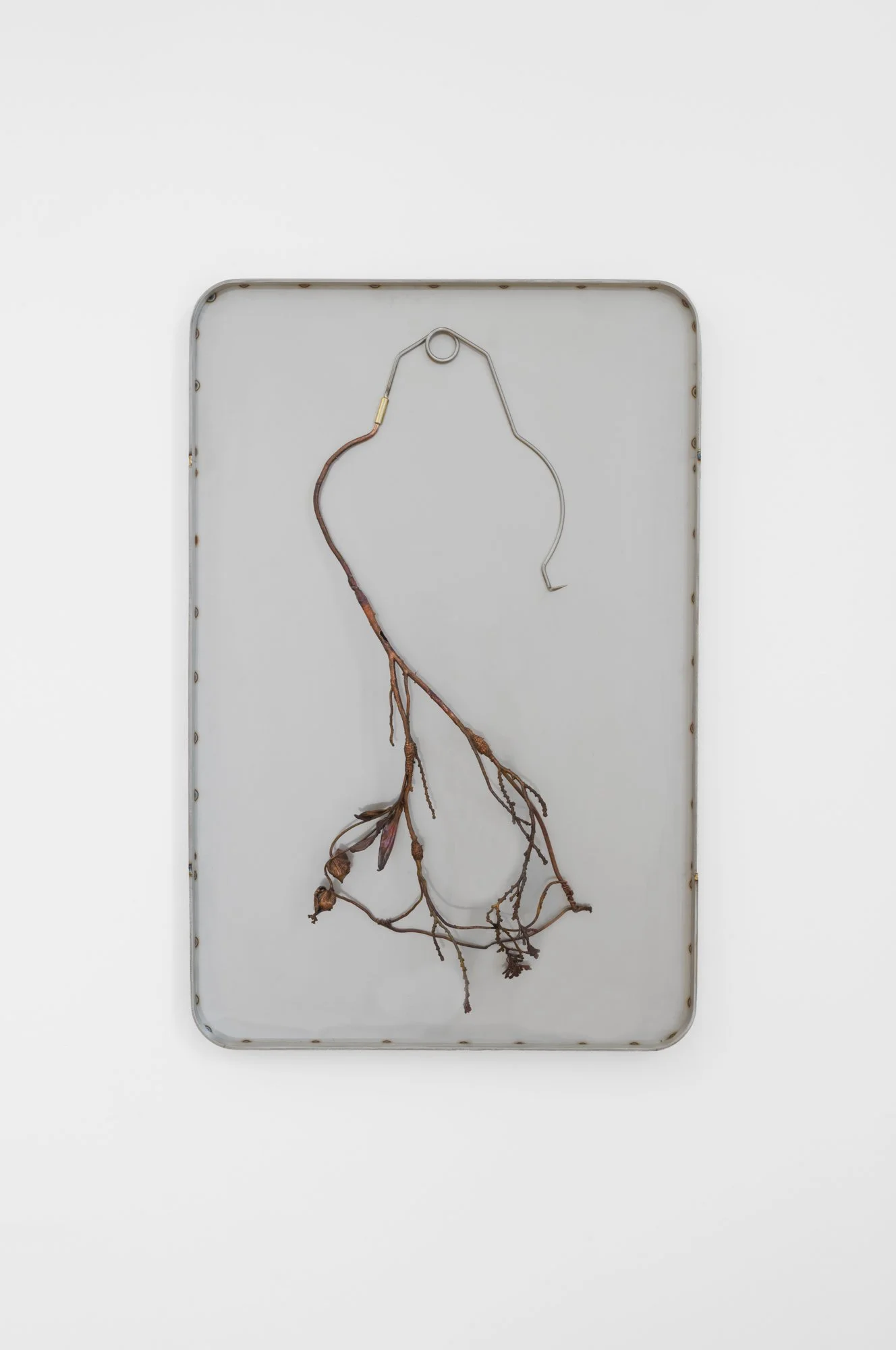
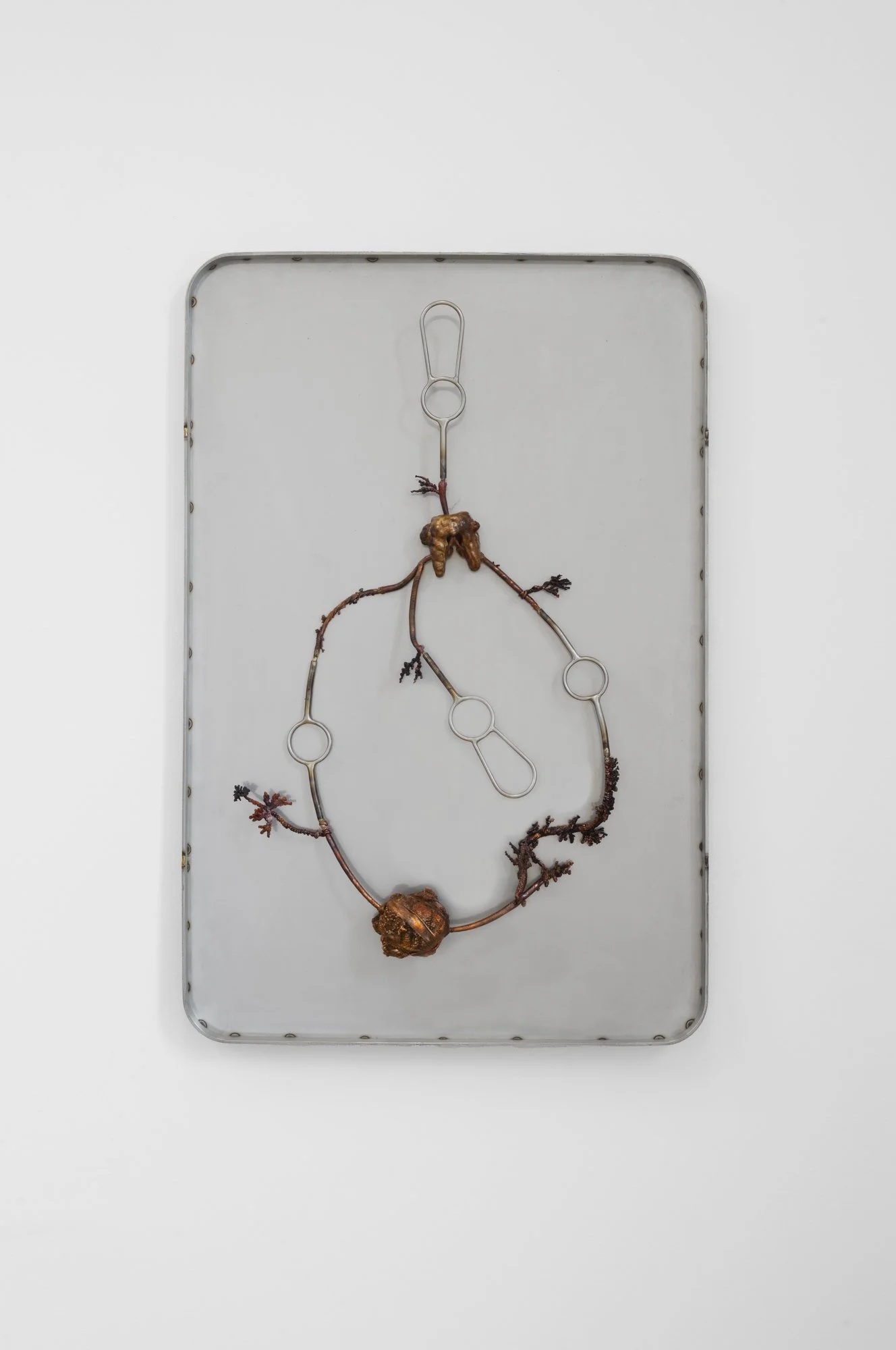
In Exploded View, Ben Gould’s first solo exhibition at Pangée, the entanglement of art, medicine, and the human body is on display. Across the gallery, his new sculptural work transforms healthcare materials and experiences into sites of aesthetic and material inquiry. Stainless-steel rods extend from a hospital gurney, holding blown-glass vessels filled with cut flowers. Tumour-like iron forms, pierced by brass instruments, rest on the floor with ridged surfaces that suggest geological and organic matter. Atop a long oak plinth, medical ‘trophies’ made of electrochemically produced copper anatomical body parts and spindly plants recall the awards and medical models displayed on a physician’s desk or in rows at medical museums. Metal trays bearing ‘tools’—wondrous inventions from the artist’s imagination—hang on the wall.
By addressing experiences of illness and medical intervention, these works evoke survival and suffering without resorting to spectacle or obvious political commentary. Gould does not present bodies visibly marked by disease, nor faces contorted in pain. Rather he invokes the body by mixing casts and sculptures of anatomical specimens, organic forms, and medical ephemera. In doing so, he creates disarticulated bodies of sorts that encapsulate diverse understandings of illness and health while resisting sensationalism and exploitation. The result is art that feels at once deeply personal and broadly resonant.
The juxtaposition of materials (glossy enamel, torched copper, raw iron) and the concurrence of handmade and ready-made objects (such as handcrafted surgical tools and trays that sit alongside an actual gurney and instruments), creates an uneasy harmony that conjures contradictory feelings. These works capture medicine’s multiple dimensions and examine our complex contemporary and historical relationships to healthcare—connections shaped by resilience and vulnerability, suffering and care, objectification and empathy. Gould’s sculptures fluctuate between these familiar binaries. They prompt us to consider our positionality and question subjectivity and objectivity, the personal and institutional, softness and hardness, mass and weight, levity and suspension, the modern and medieval.
In this way, Gould participates in the art historical tradition of artistic engagement with medicine. From modernist notables Edvard Munch and Vincent Van Gogh to contemporary figures Tracy Emin and Ron Athey, artists have transformed their own direct encounters with illness into explorations of the body as subject, object, and medium. Gould similarly moves between the personal and the art-historical. Specifically, he draws on his experience with Tourette’s Syndrome and thyroid cancer while also addressing broader medical and artistic iconographies—from historical anatomical illustrations and models to current installation and performance art. "I have not always made work about disability or illness," Gould notes. "But my ongoing experience with healthcare and its complications has inevitably influenced the fabric of my work. Medicine has become an unavoidable part of my artistic language."
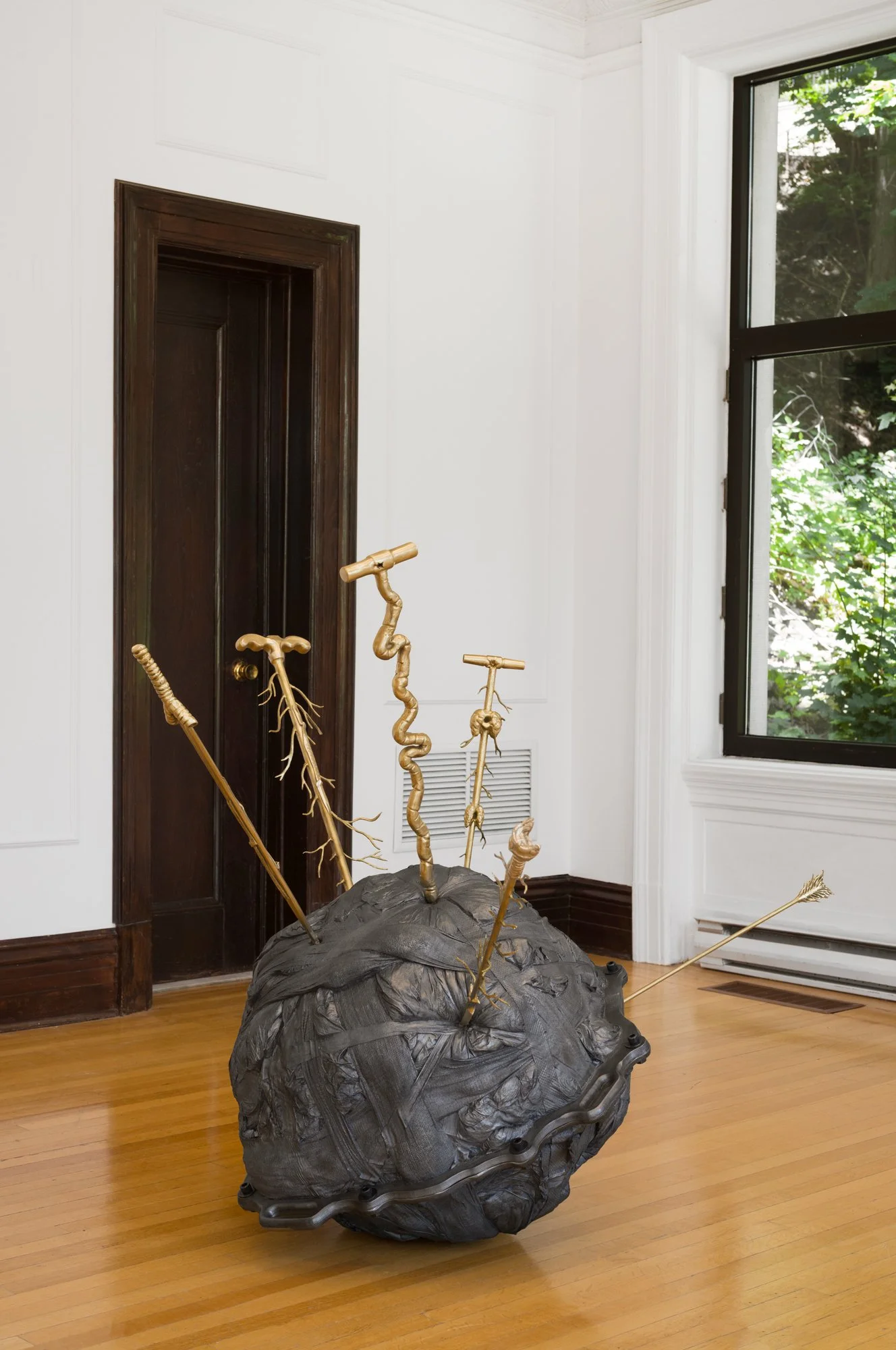
While Gould is intimately familiar with healthcare systems, his art is not simply autobiographical. Rather, it is situated within wider histories of looking, diagnosing, and treating the body—a body that, in his work, drifts between the clinic and the apothecary. For Gould, the medieval wound man holds particular symbolic relevance. The wound man first emerged in the fourteenth century as a medical illustration of a male body marked by injuries and ailments. Used as a visual guide to diagnosis and treatment, the figure was often shown punctured by objects that signified common wounds: it conveyed both injury and healing. For Gould, wounds can be generative, and this belief harks back to a much earlier time when thinking about the body, illness and treatment felt more poetic and less calculated, and when the body itself served as a means of making sense of the world.
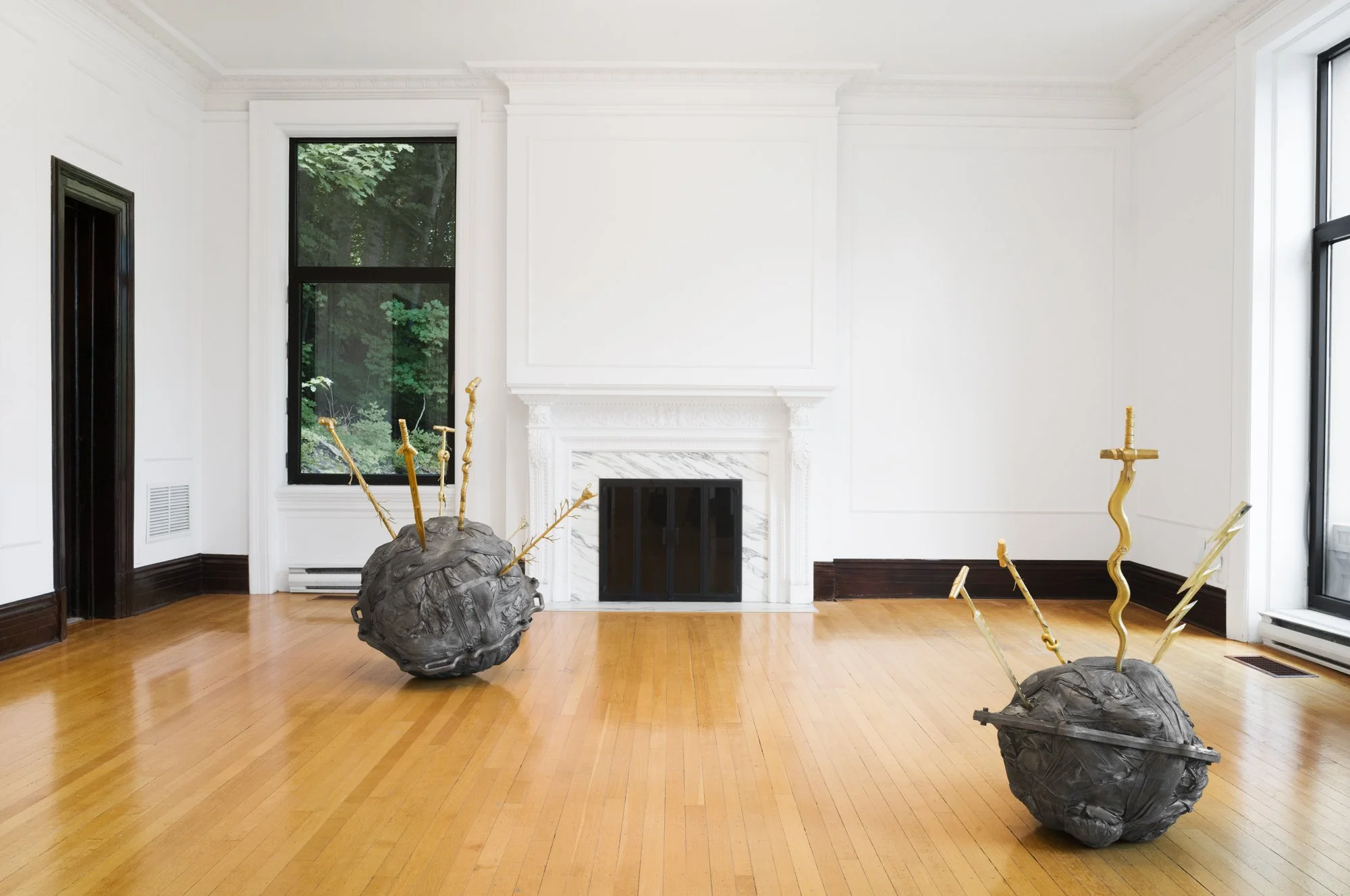
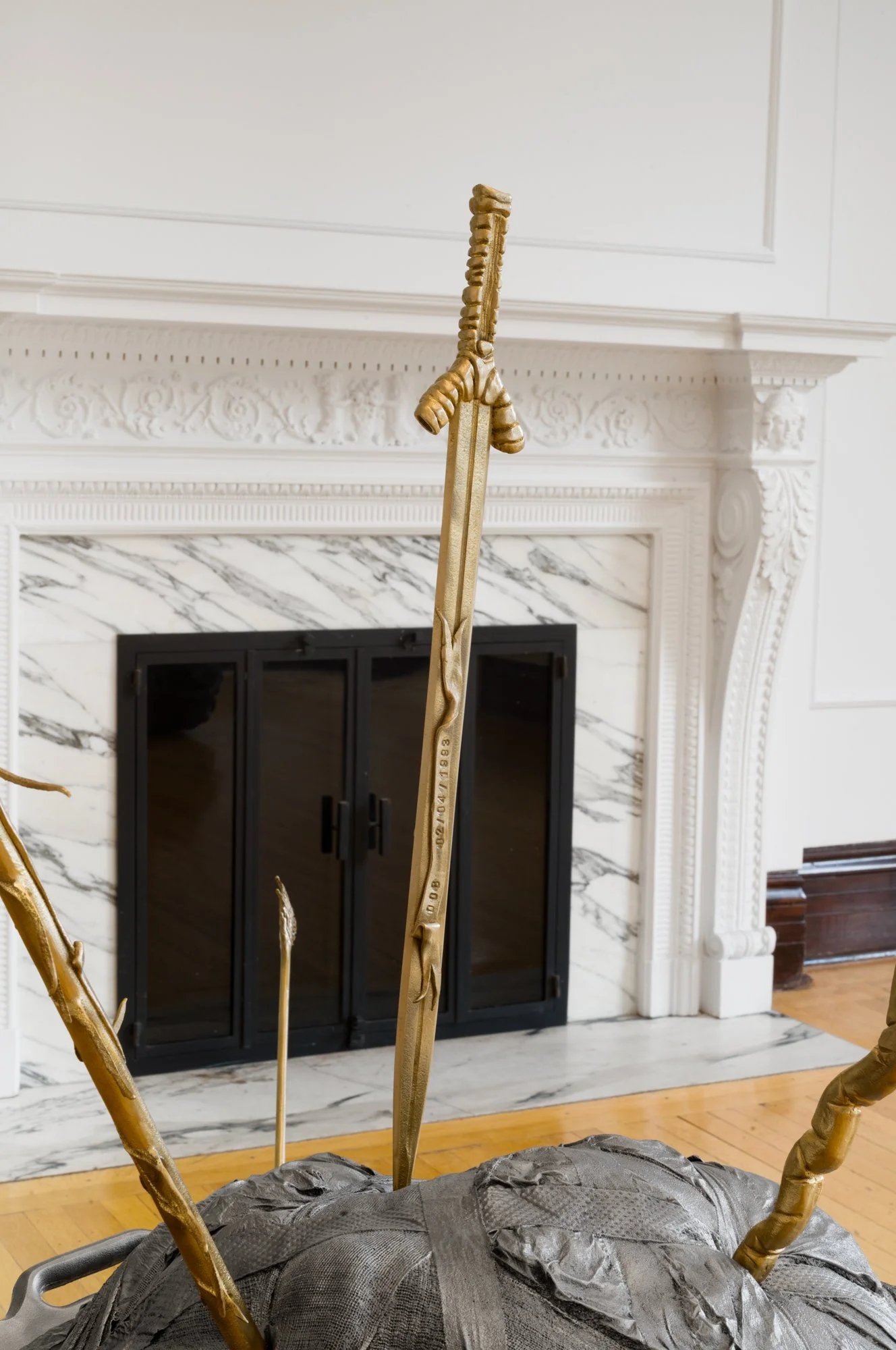
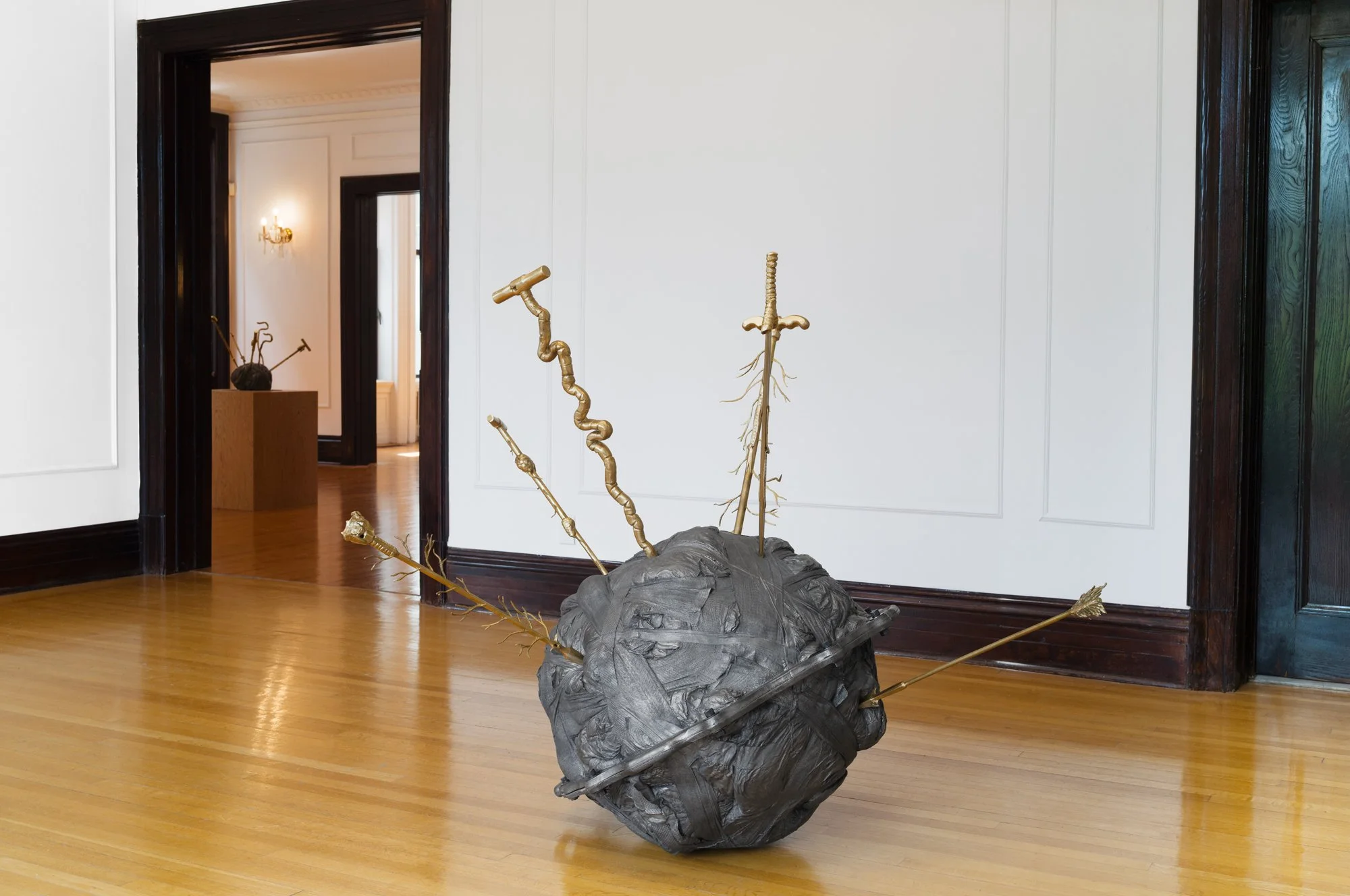
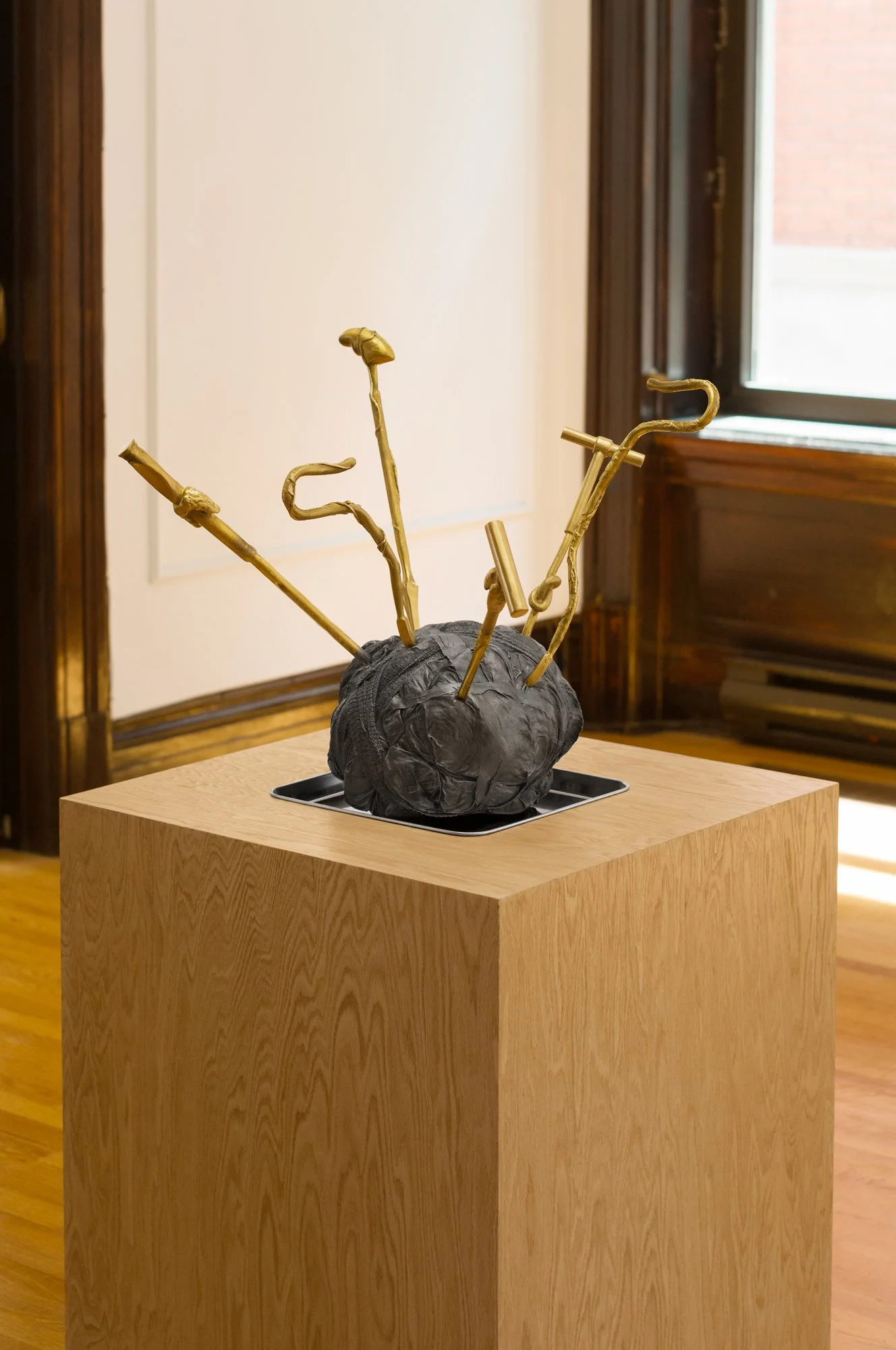
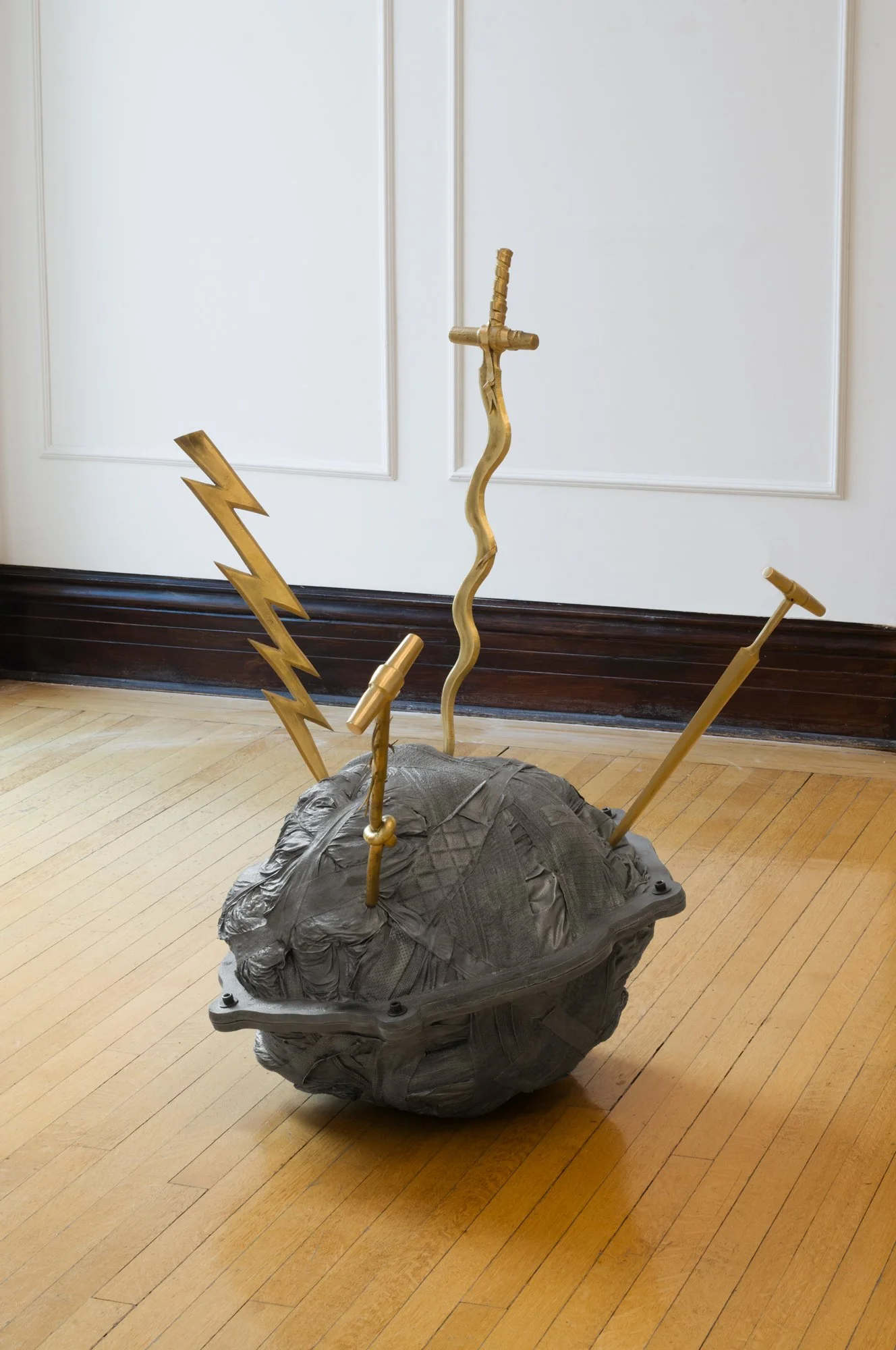
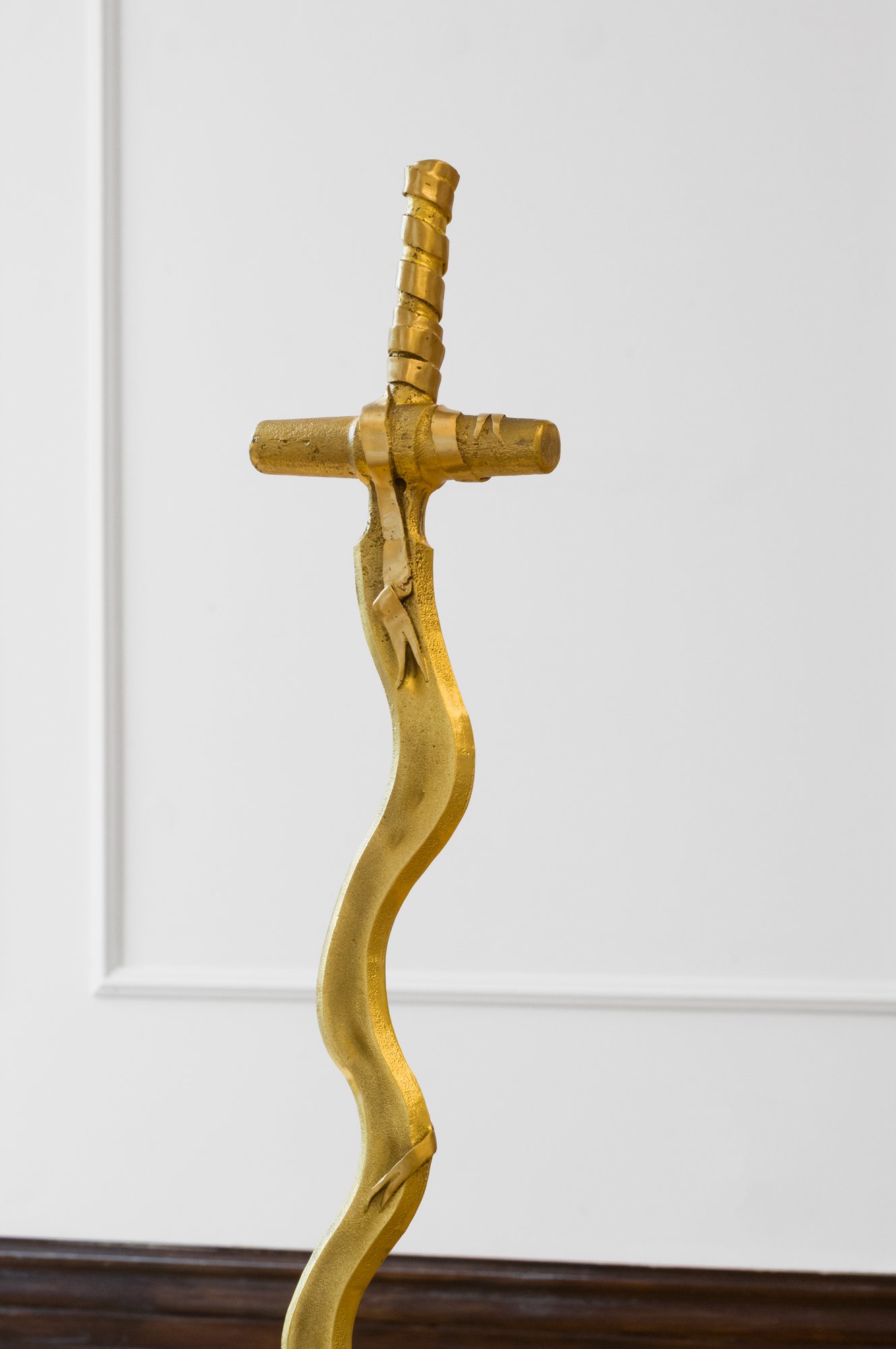
Gould’s tumour series references the wound man through the brass instruments, resembling medieval spears and surgical tools, that puncture the metal masses. These implements, adorned with casts of plant and body parts, allude to medical practices of the past and present. Lightning bolts appear alongside casts of medical models of thyroids and endocrine vessels, collapsing distinctions between the magical and the medical and recalling historical periods when healing remained intertwined with alchemy and religious belief. Medicine emerges here not as a stable system of knowledge but as a field shaped by experimentation, uncertainty, and power.
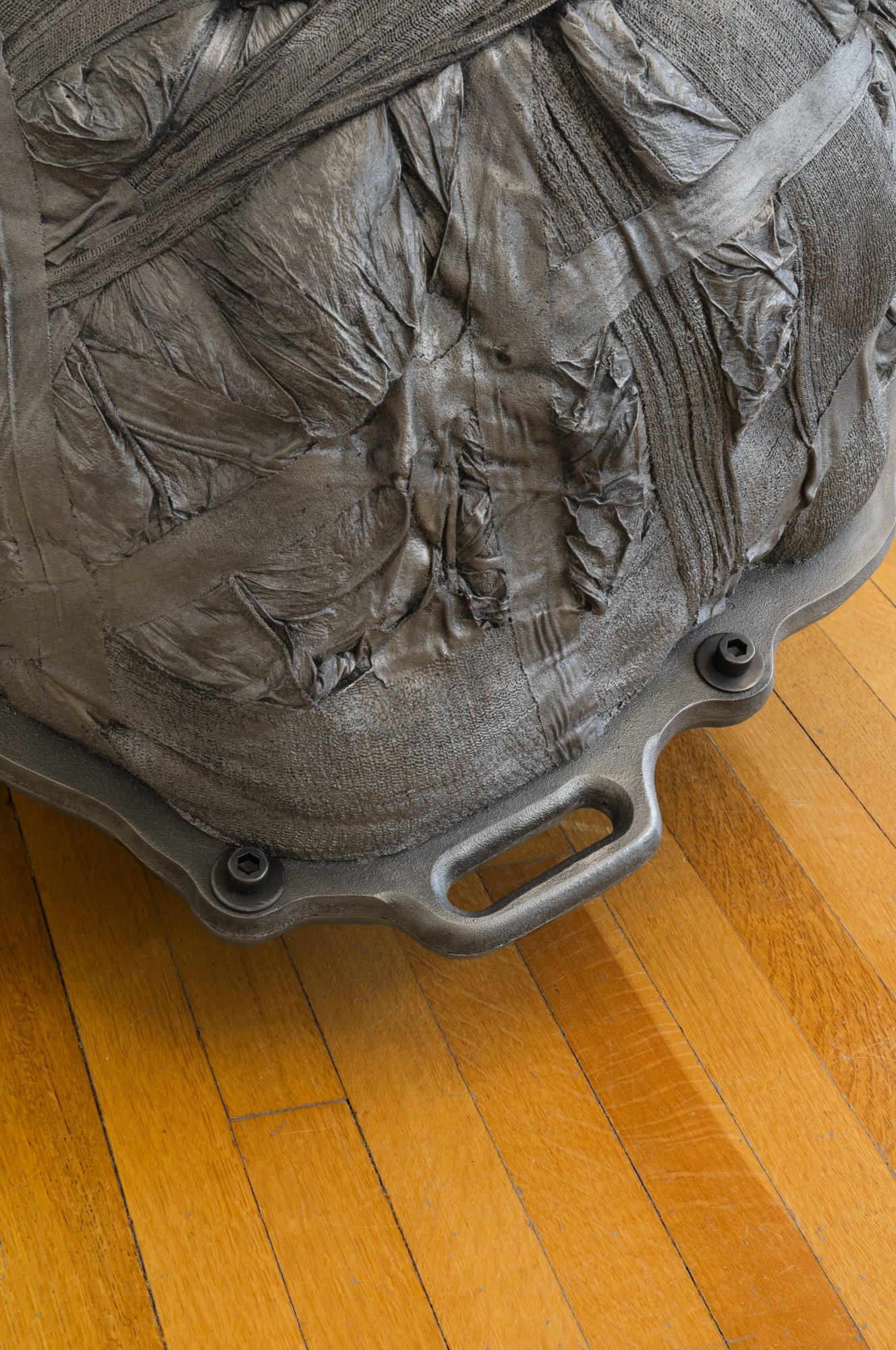
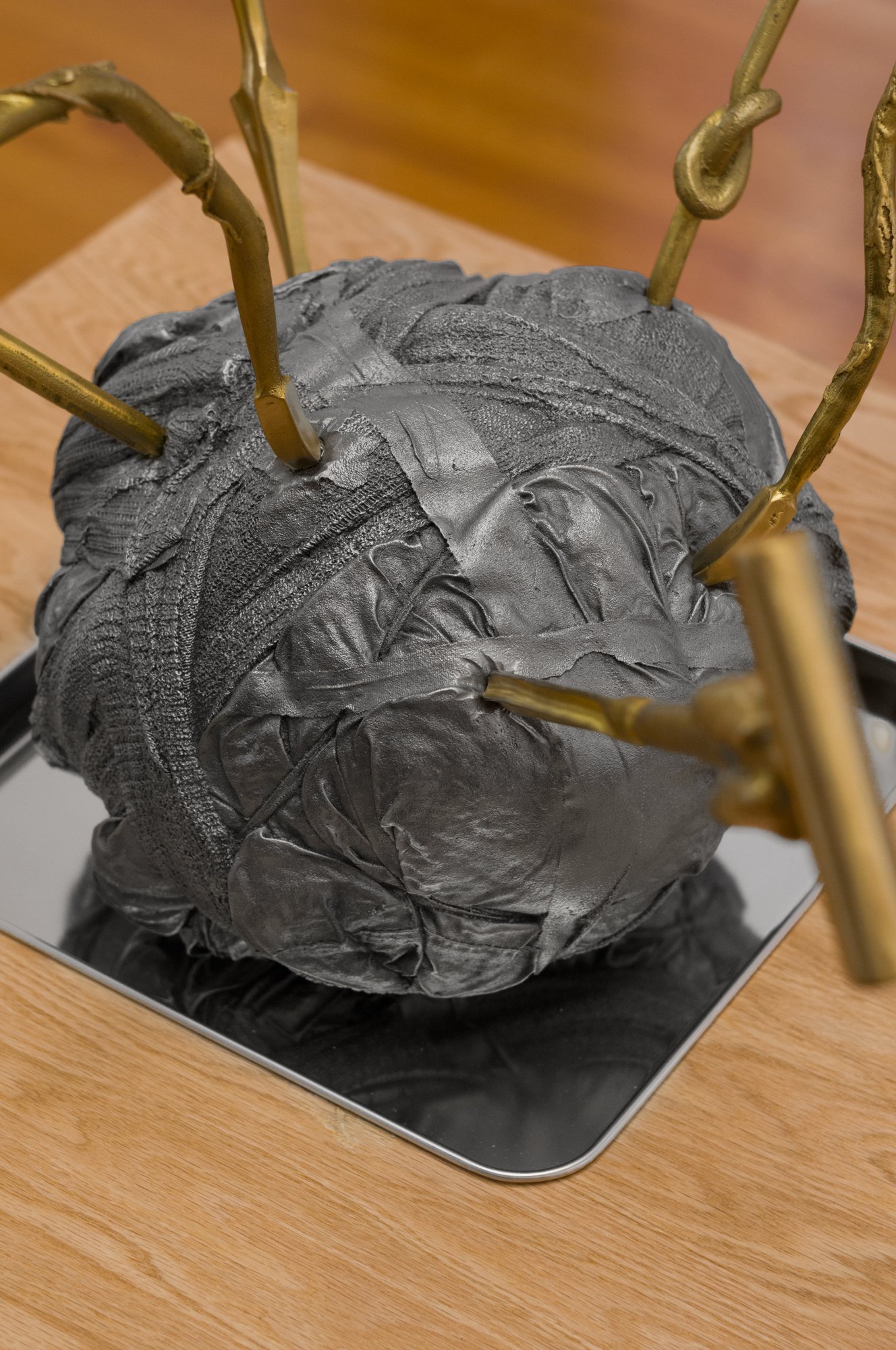
The ‘tumours’ are iron casts of remnants from the artist’s own medical treatments: bandages, medical tape, cushions, and other pliable materials. Hardened into metal, these once-flexible substances become enduring objects of weight and permanence. Despite the softness of their original materials, these casts hold their ground with the stubbornness of boulders, their heaviness suggesting a resistance to medical intervention and control.
The tumours’ seriality reflects medicine’s emphasis on classification, staging, and progression. Yet Gould subtly subverts this clinical impulse. Each mass is rendered with extraordinary detail and artistry through the casting process. Threads of bandages remain visible. Tiny zippers and minute grids of medical tape are meticulously preserved. Like pathologists examining cells under a microscope, we viewers inspect the tumours’ surfaces, drawn in by their unexpected intricacy and beauty.
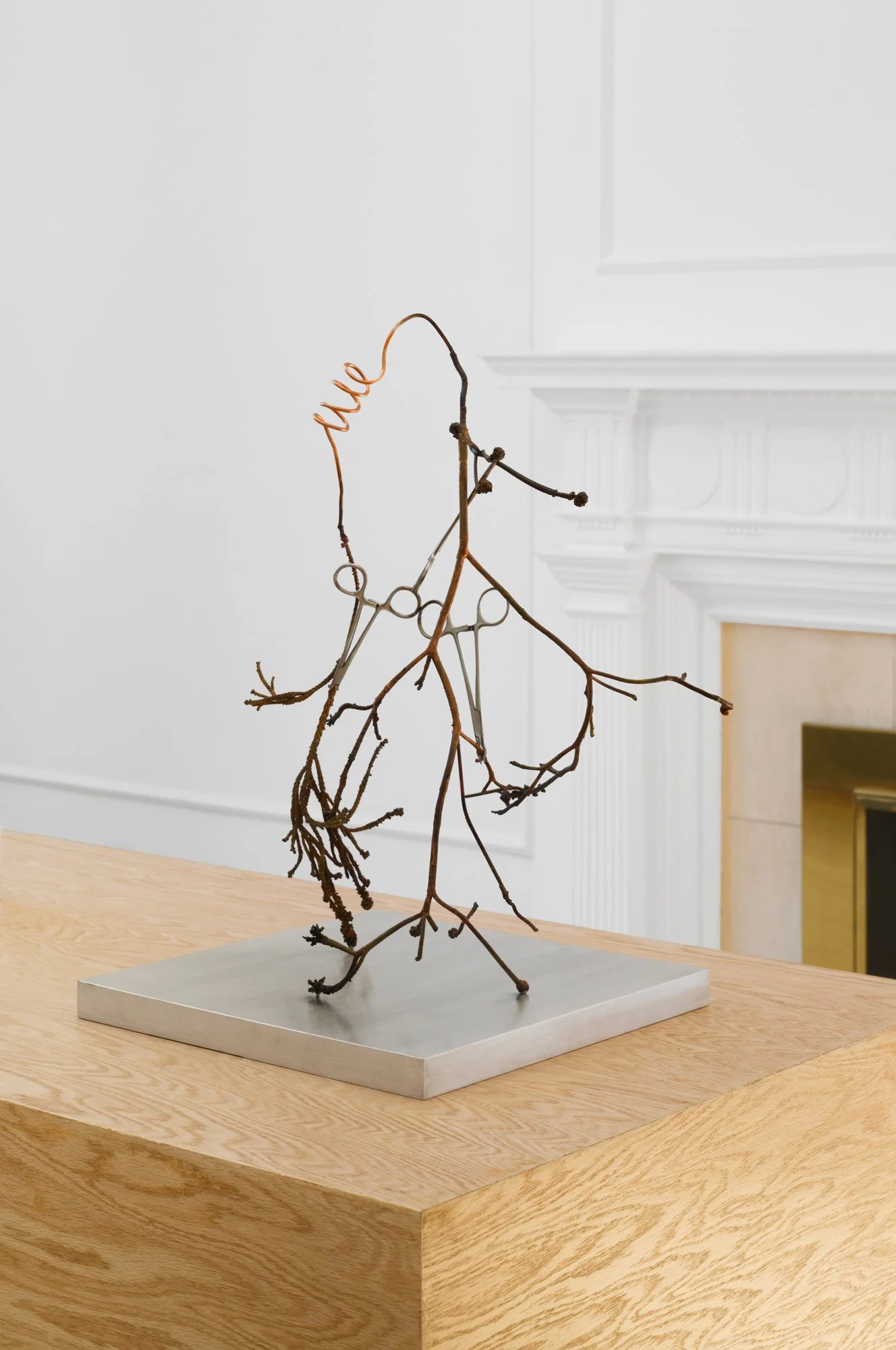
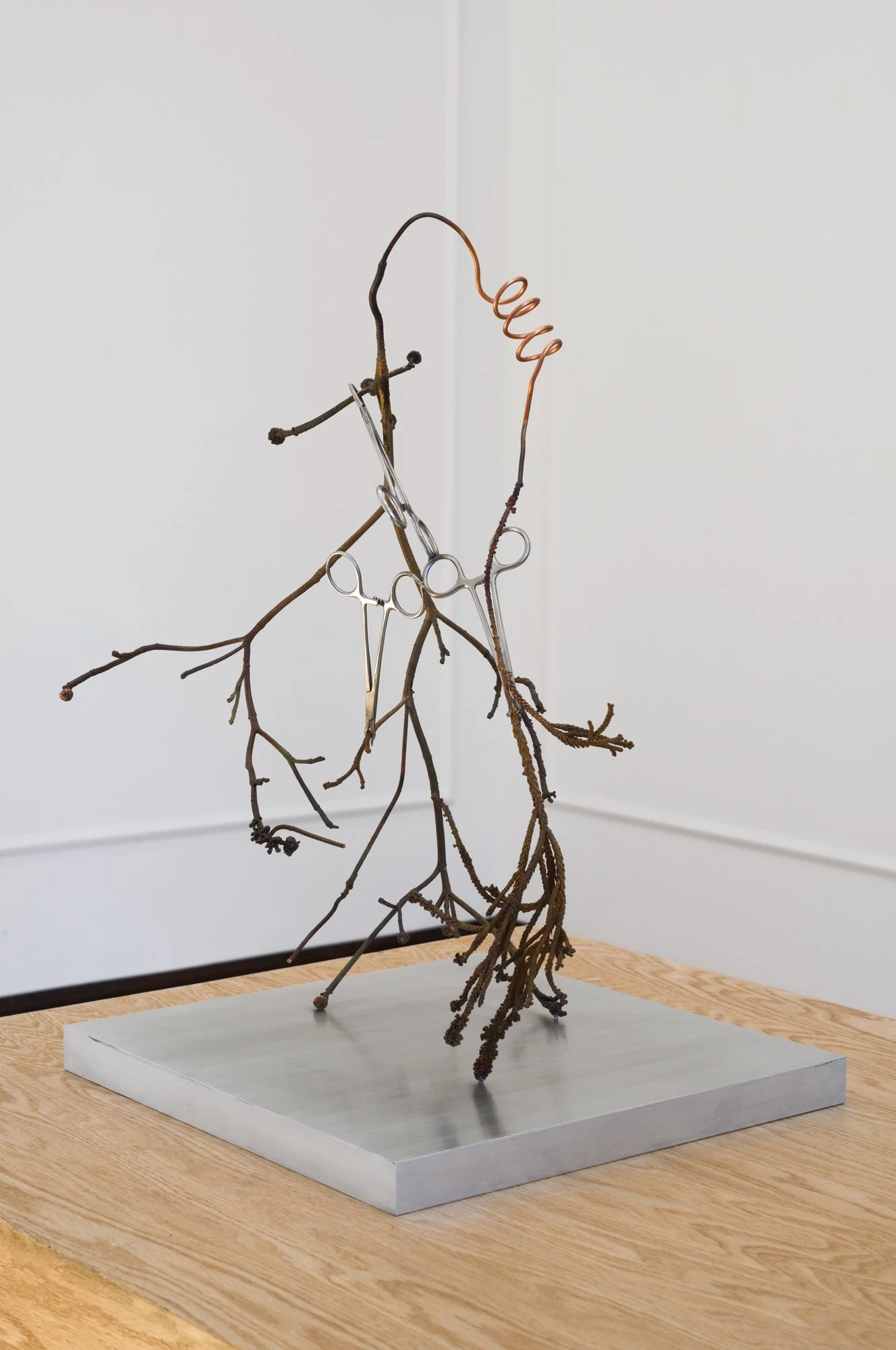
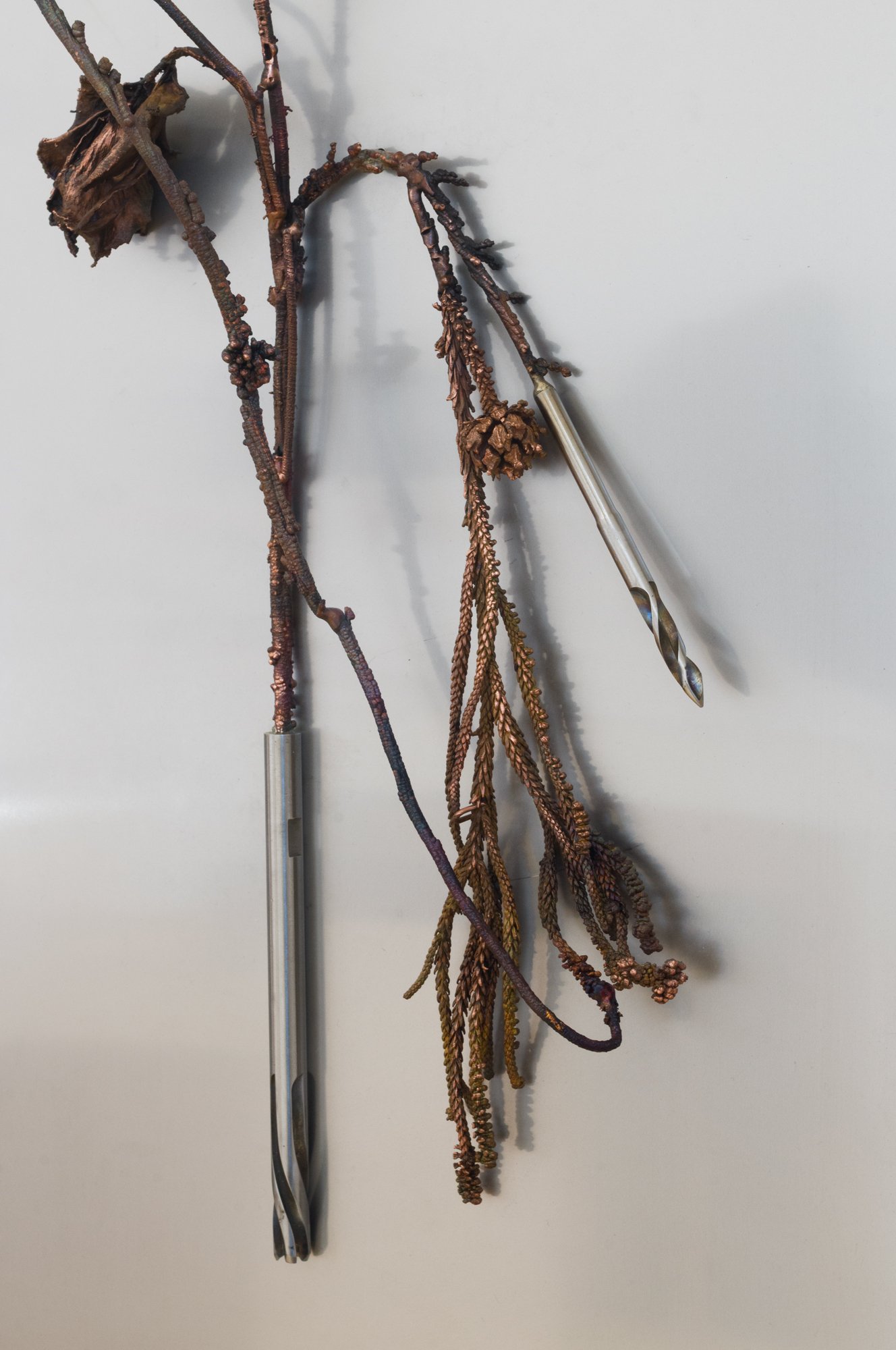
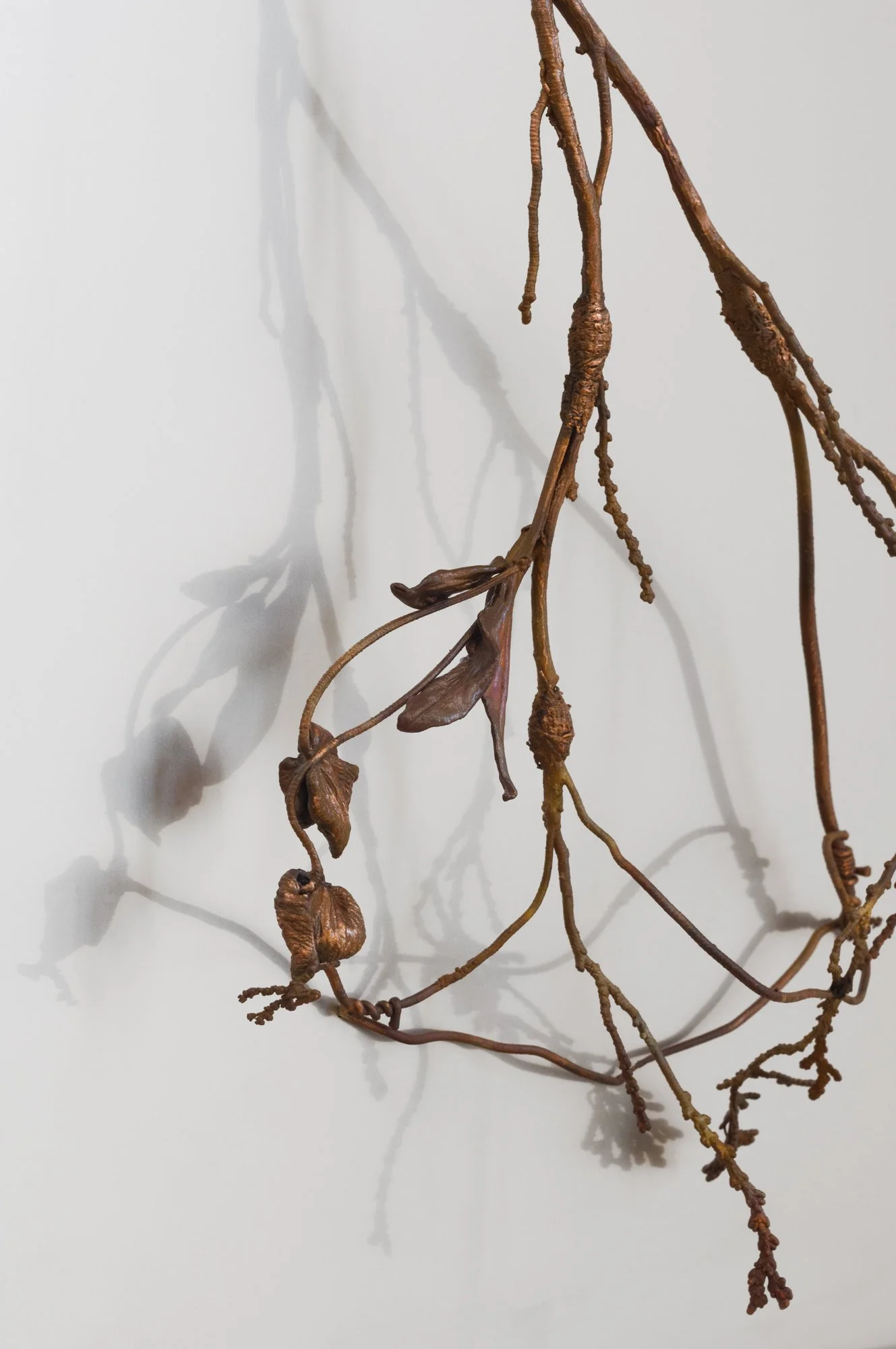
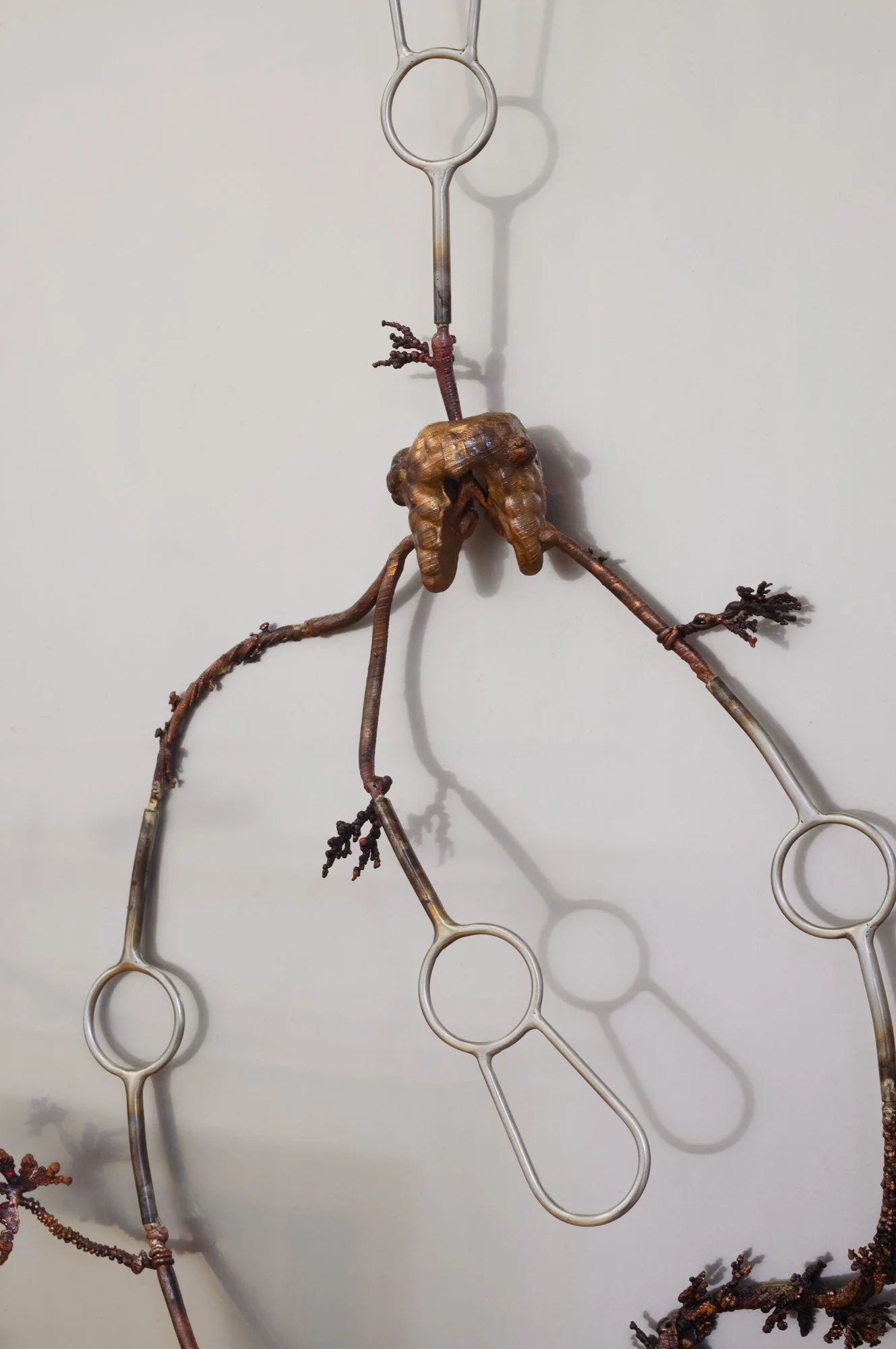
In both the Trophies and Tools series, Gould—inhabiting a hybrid role as chemist, artist, and alchemist—used an electrochemical method to produce copper effigies of anatomical models, tools, and coniferous branches that he then arranged into sculptural forms. In Trophies, the resulting metal structures are materially durable yet appear delicate. In this way, they capture the duality of lymphatic and circulatory systems with their maze of vessels, both fragile and robust. The Trophies draw upon the diagrammatic language of anatomical models and drawings yet here the legible, pedagogical model is turned on its head: these ‘specimens’ defy medical categorization and understanding.
The Tools display a related mixture of assembled objects presented on a surgical tray. Rather than looking down at a tray like a surgeon during an operation, we encounter them hung on the wall like paintings. Gould’s artistry and skill emerge as we attempt to decipher what is handcrafted from what is mass produced. This interplay between the handmade, readymade, and re-made exhibits a tension between the idiosyncratic and the standardized, where personal variation and expression are balanced against procedural consistency and know-how. This dynamic underpins both art making and medical practice.
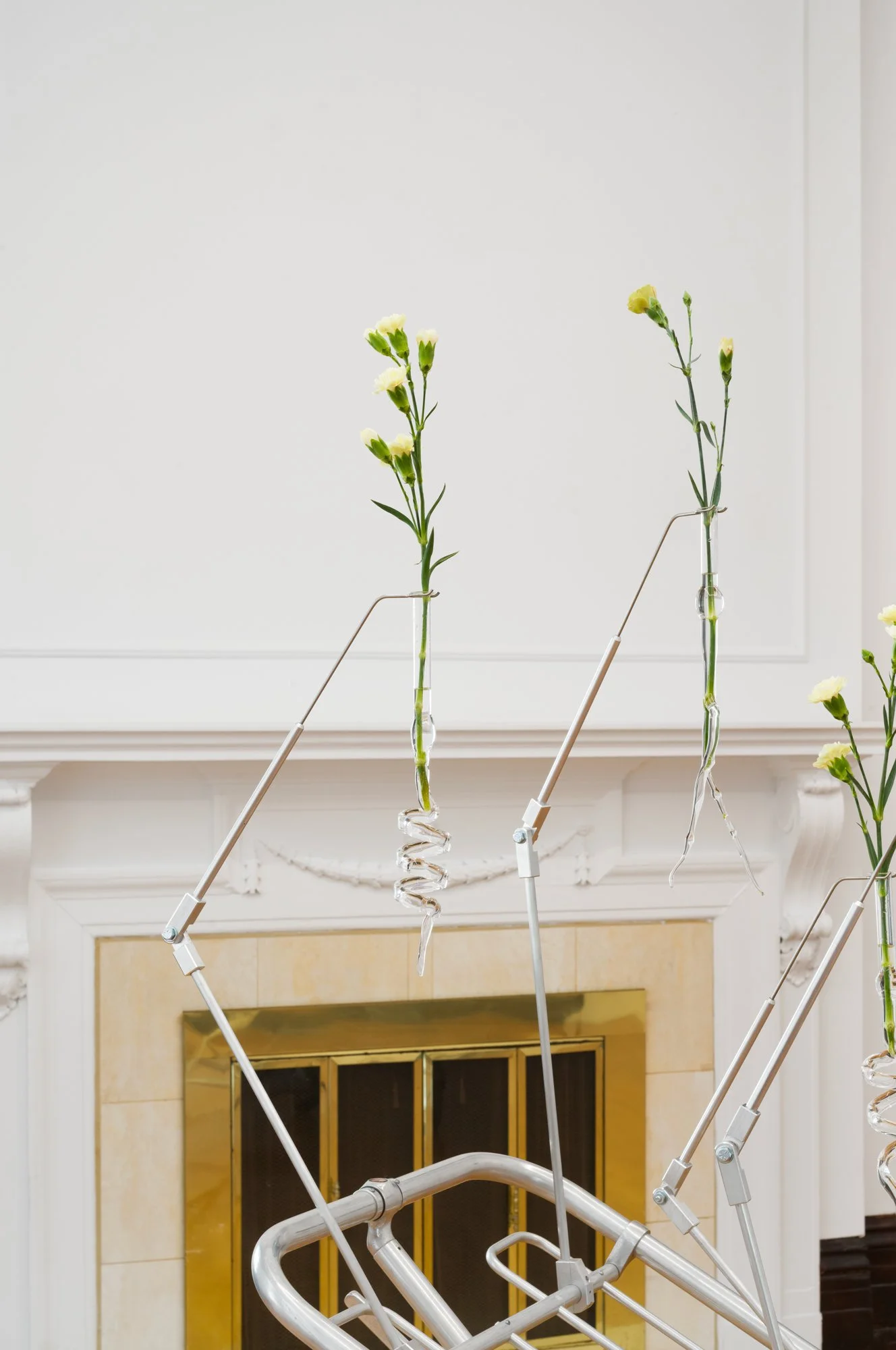
This tension is also evident in Ark. Here, a found gurney functions simultaneously as refuge and warning, a place of rest that signals frailty and recovery but also subjugation to the medical-industrial complex. Hand-made stainless-steel extensions protrude from its frame, supporting pipette-like blown-glass vials filled with flora. The structure resembles an insect overturned on its back, its spindly appendages reaching outward, a call to surrender.
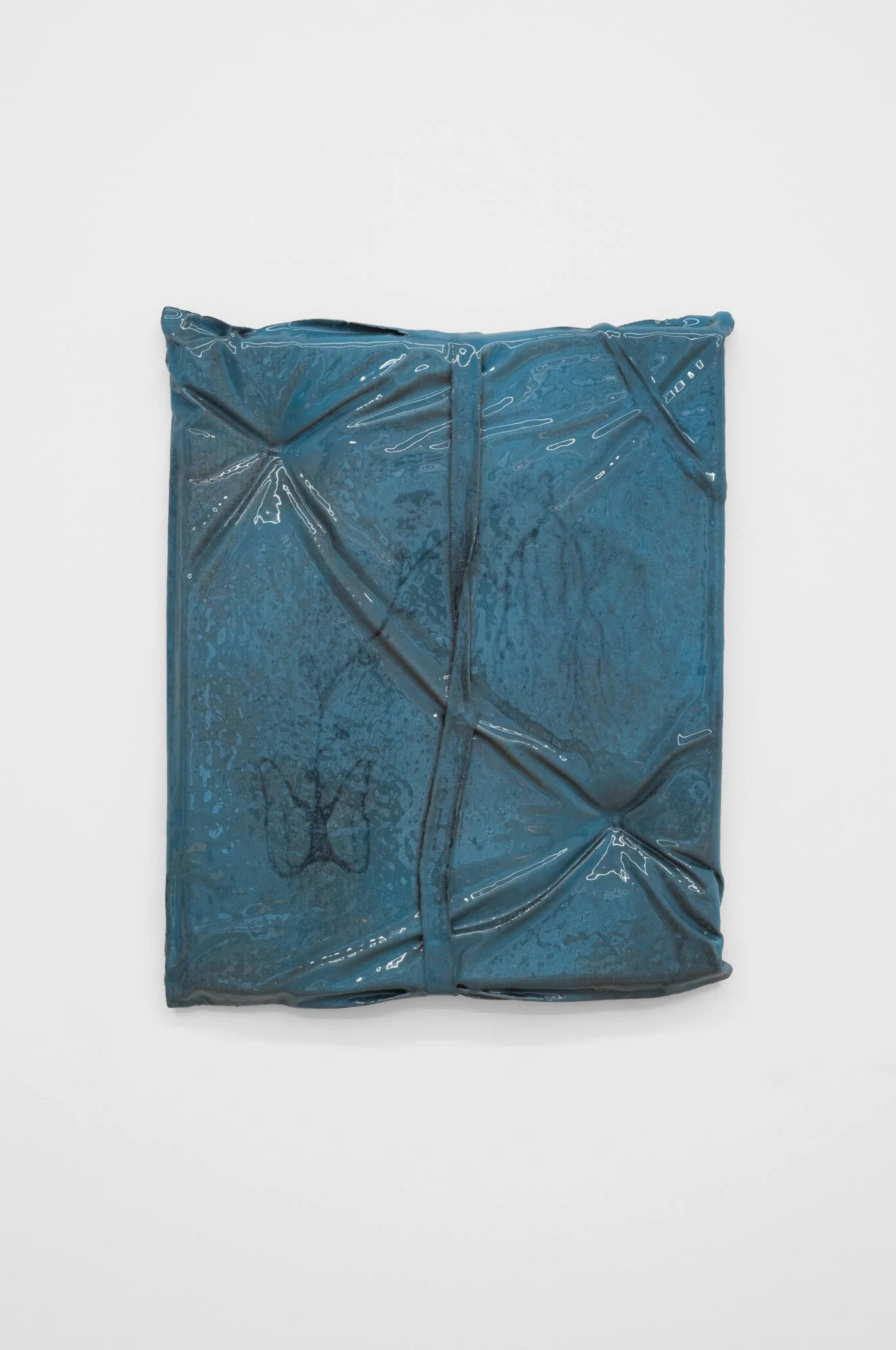
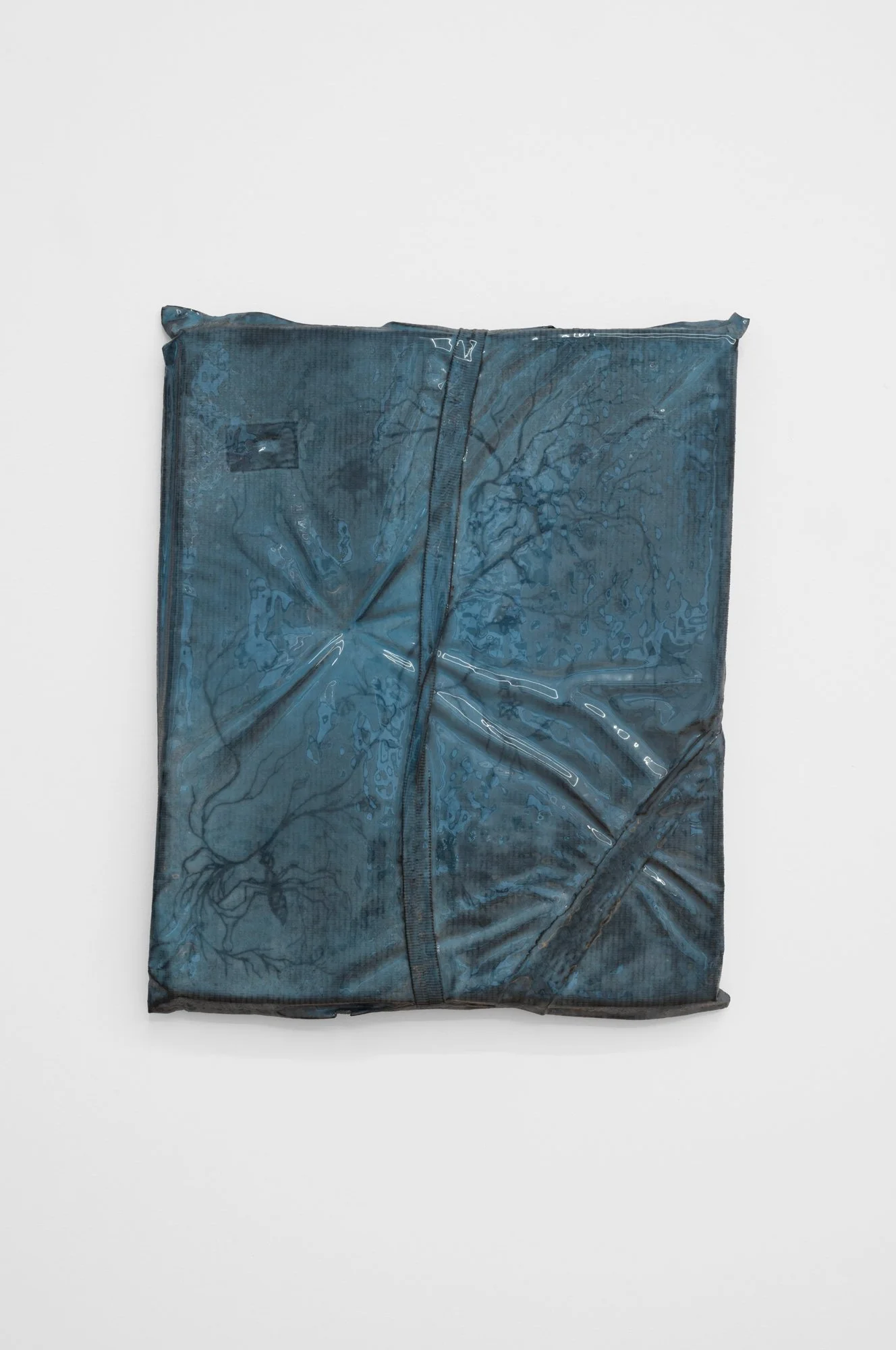
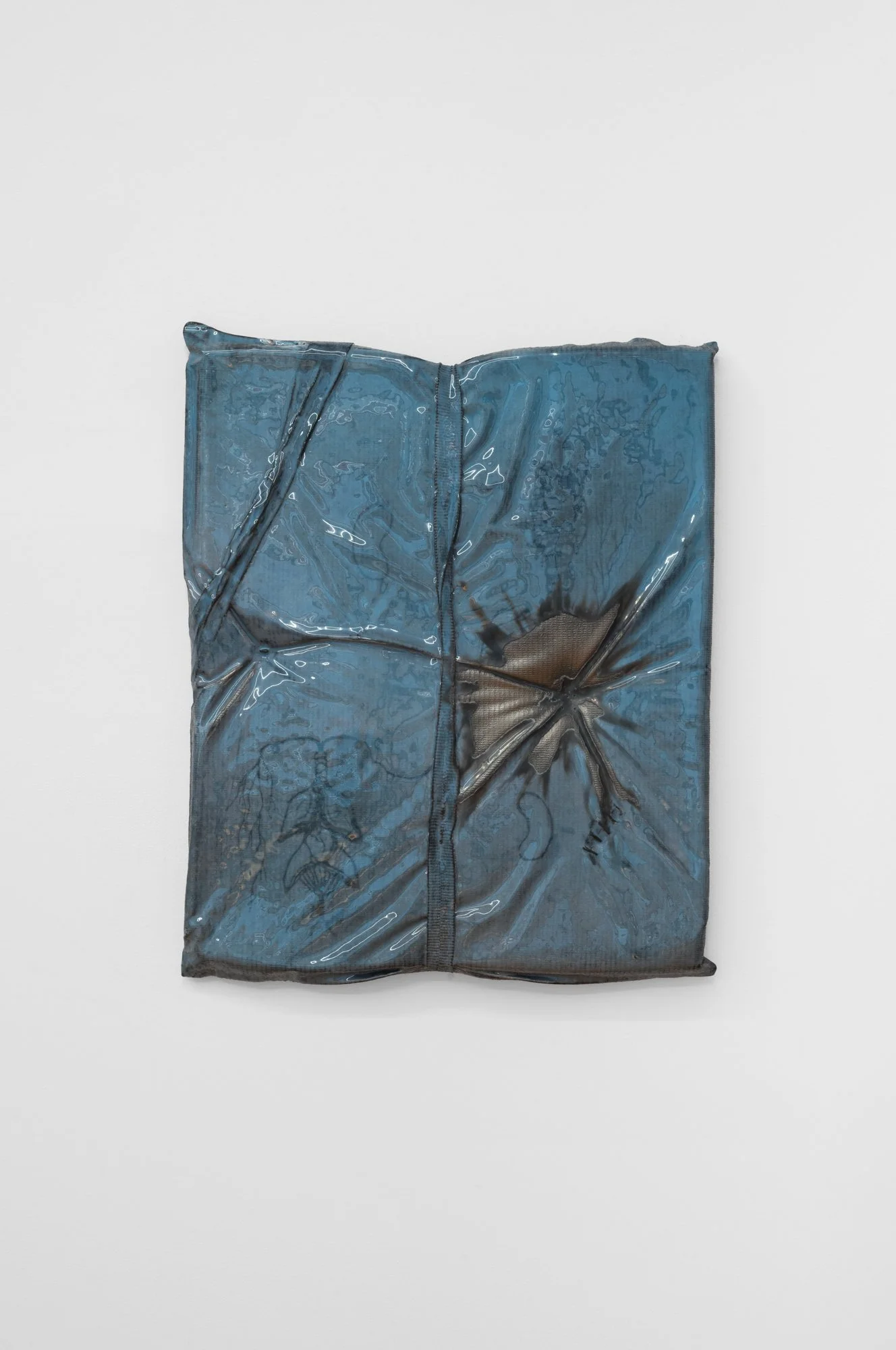
Similar ambiguities emerge in the artist’s Shields. These reliefs are formed from iron casts of the protective cushions tied to hospital beds to shield patients from their body’s (uncontrolled) movements. Gould coated some of the casts in blue enamel to reference how the colour was historically used in hospitals to ostensibly produce a sense of calm. The enamel itself also refers to its use in Victorian medical trays and bowls—sifted over hot iron, it made the metal less porous and thus easier to clean. Gould originally conceived these works through his personal encounters with these cushions and understood their role as hovering between protection and defence. The casts encourage us to question who requires protection—the patient from illness, or the institution from legal liability? As Gould noted, “When you spend a lot of time in medical spaces, objects can transform from protection and comfort to oppression. The works are oxymorons.”
Ark and the Shields resist the detachment often associated with medical contexts by inciting a sense of corporeality and wonder. Viewing the Shields, we are presented with hard padding that would bruise the body upon impact. Yet Gould has included depictions of delicate flowers, sutures and other anatomical elements, like veins, into the enamel. Similarly, when confronted with Ark, we imagine our bodies, thinly veiled by a hospital gown, pressing against an unforgiving metal frame. At the same time, blooms emerge from this clinical structure, introducing vitality into an otherwise sterile object. The corkscrew-shaped glass vessels call to mind both plant roots and laboratory test tubes. Their ramifying forms recall lymphatic networks and botanical branching systems. These motifs establish visual connections across Gould’s many artworks, from the instruments piercing the tumours to the objects suspended on the trays and displayed as trophies, all of which incorporate small sculptures of anatomical and plant life.
Gould’s work makes us acutely aware of our bodies—our outsides and insides, our feelings and physicality, our vitality and mortality. As we move around the sculptures, our look alternates between the aesthetic and diagnostic. We occupy positions of both patient and physician, at once subjecting ourselves to a medical gaze while also adopting the physician’s diagnostic scrutiny of surface and detail. Through these multiple forms of spectatorship, Gould’s art resists certainty and remains open to interpretation. It reminds us that the body is both vulnerable matter and a site of resilience and transformation. Exploded View’s power lies in sustaining this dual awareness, asking us to inhabit the uneasy space where care and fear, fragility and strength, coexist.